How Scientists Uncovered the Hidden Drainage
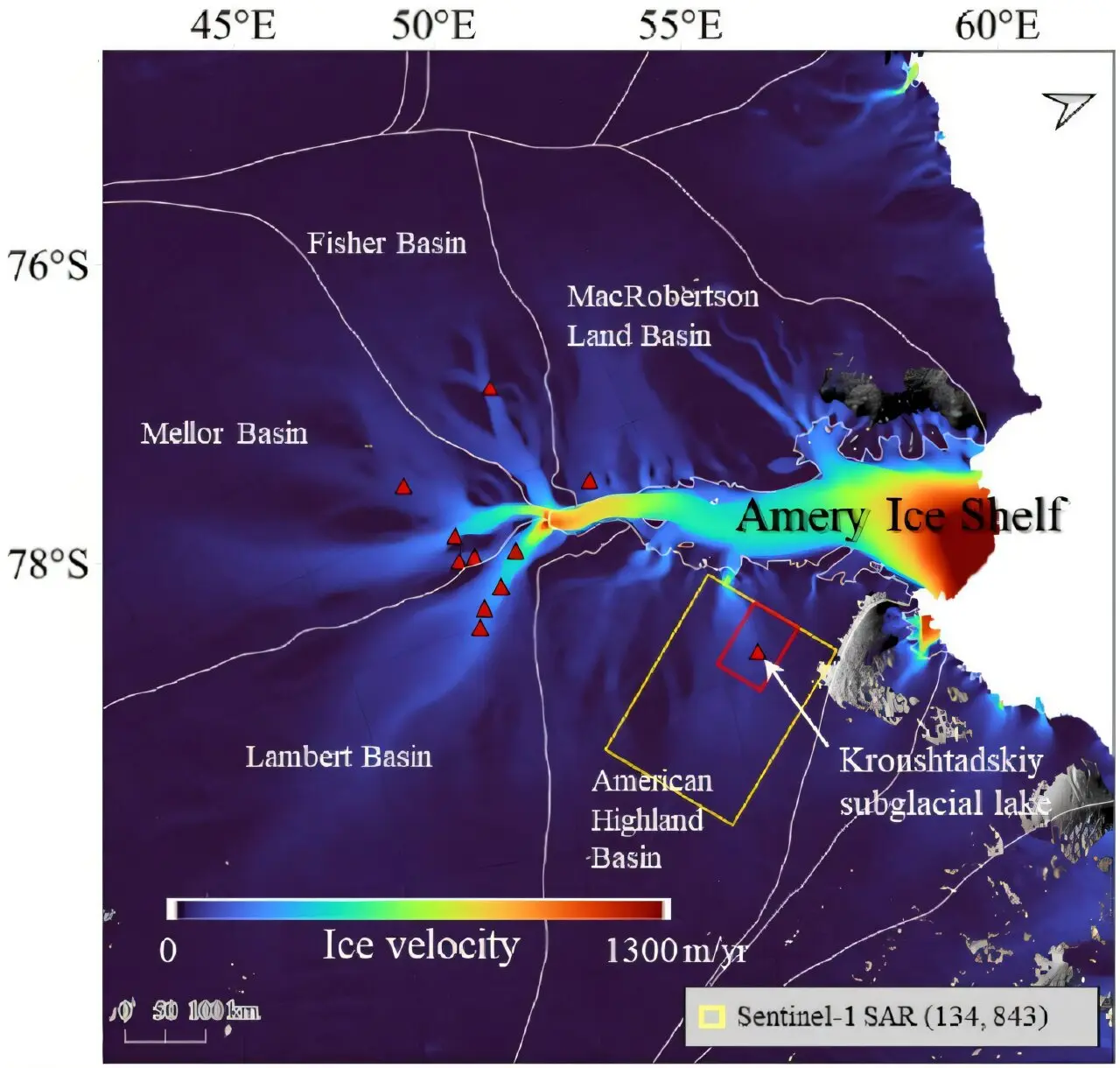
A previously concealed subglacial lake beneath East Antarctica's Amery Ice Shelf has lost an enormous volume of water, creating a depression in the ice sheet that deepened by over 6 meters (20 feet) at its center. The Kronshtadskiy subglacial lake, buried beneath kilometers of Antarctic ice, was invisible until its drainage left a visible scar detectable from space. Scientists identified the sinking ice using satellite measurements collected between 2002 and 2020.
The lake sits beneath approximately 3 kilometers of ice in a remote region of East Antarctica. Researchers tracked the ground surface using satellite radar altimetry and gravimetry data from NASA and European Space Agency missions. As the hidden lake drained, the weight of the overlying ice sheet shifted, causing the surface to subside gradually. The total water loss is estimated at roughly 1.9 cubic kilometers, an amount comparable to a large inland sea.
The discovery relied on long-term satellite monitoring rather than direct access. Because the lake lies beneath thick ice, traditional fieldwork cannot reach it. Instead, researchers analyzed subtle changes in ice surface elevation recorded by multiple satellites over nearly two decades. When the lake released its water, the reduction in subglacial pressure allowed the ice above to sink. The pattern of subsidence helped scientists map the lake's boundaries and estimate how much water had escaped.
What Does This Mean for Antarctic Ice Stability?
Lead researcher Andrew Zinin noted that such events are rare but significant. „These sudden drainage events can redistribute water across vast underground networks,”he explained. The water likely flowed through subglacial channels toward the ocean, potentially influencing ice shelf stability far downstream.
The drainage event highlights how dynamic Antarctica's hidden hydrological systems can be. While a single lake's emptying may seem minor, it demonstrates that large volumes of water can move beneath the ice sheet without warning. If similar events occur more frequently, they could weaken the structural integrity of ice shelves that act as barriers holding back inland glaciers.
Scientists are now expanding satellite surveillance to detect other concealed lakes that may be draining silently. Understanding these processes is critical for predicting how Antarctica will respond to a warming climate.
Frequently Asked Questions
How was the lake discovered? Researchers detected the lake's drainage through satellite radar altimetry, which recorded a 6-meter depression in the ice surface over nearly two decades of monitoring.
How much water was lost? Approximately 1.9 cubic kilometers of water drained from the Kronshtadskiy subglacial lake, making it one of the largest known subglacial drainage events in East Antarctica.
Why does this matter for sea level rise? While the water flowed to the ocean, future similar events could destabilize ice shelves and accelerate glacier flow, contributing to higher global sea levels.