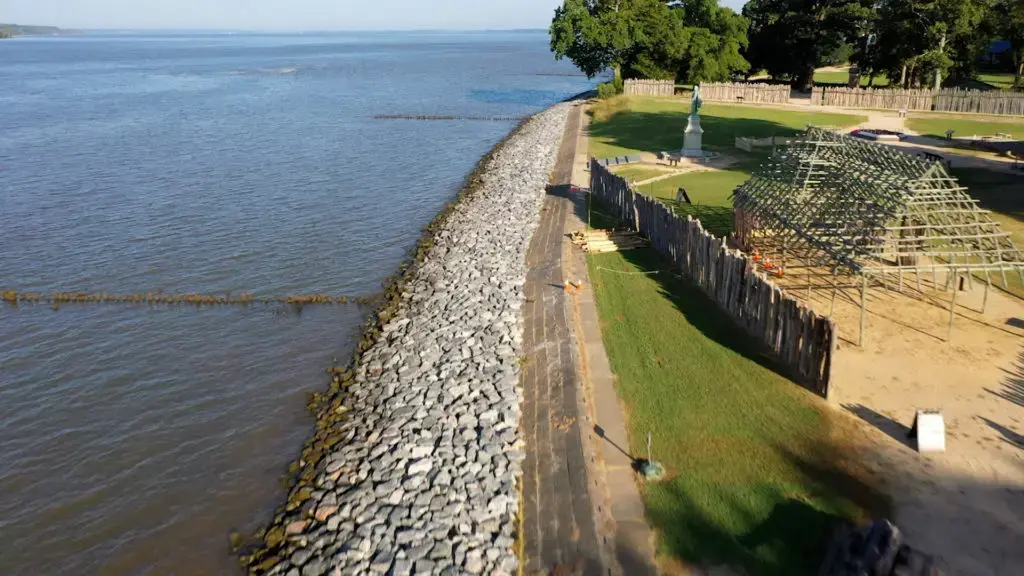
Jamestown's Battle Against the Tides
Historic sites across the United States are increasingly vulnerable. Rising sea levels and coastal erosion pose a significant danger. Jamestown, Virginia, a pivotal early American settlement, is particularly at risk. This threat looms as the nation approaches its 250th anniversary.
The very foundations of these irreplaceable cultural treasures are being undermined. Climate change accelerates these natural processes. Many historical locations are situated along coastlines or rivers, making them susceptible to water damage.
Jamestown, established in 1607, is a prime example. It is America's first permanent English colony. The site holds immense historical value, but it sits on low-lying land. Tidal waters now frequently inundate parts of the archaeological park.
Can We Save Our Past from the Future?
Erosion is also a constant concern. The land is slowly washing away. Experts are working to protect the remaining structures and artifacts. They use various methods, including building seawalls and elevating vulnerable areas.
The challenge extends beyond Jamestown. Other coastal historical parks face similar issues. Preserving these sites requires substantial resources and innovative solutions. It also demands a national commitment to addressing climate change.
Failure to act could mean losing invaluable pieces of American history forever. Future generations might only read about these places. Their physical presence could vanish under rising waters.
Frequently Asked Questions
What makes Jamestown so vulnerable? Jamestown is located on a low-lying island in the James River. This geographic position makes it highly susceptible to rising sea levels and increased storm surges. The soft soil also contributes to rapid erosion.
What measures are being taken to protect historic sites? Protection efforts include constructing physical barriers like seawalls and breakwaters. Scientists are also exploring nature-based solutions, such as restoring wetlands. Moving artifacts and structures to higher ground is another strategy.
Why is it important to protect these historical sites? These sites are crucial for understanding our national heritage and identity. They offer tangible links to the past, providing educational opportunities and fostering a sense of shared history. Losing them would be an irreparable cultural loss.