From Seafloor Chemistry to Cellular Energy
Scientists at Heinrich Heine University Düsseldorf have identified a geochemical molecule produced by deep‑sea vents that could have supplied the energy needed for the earliest biochemical reactions.
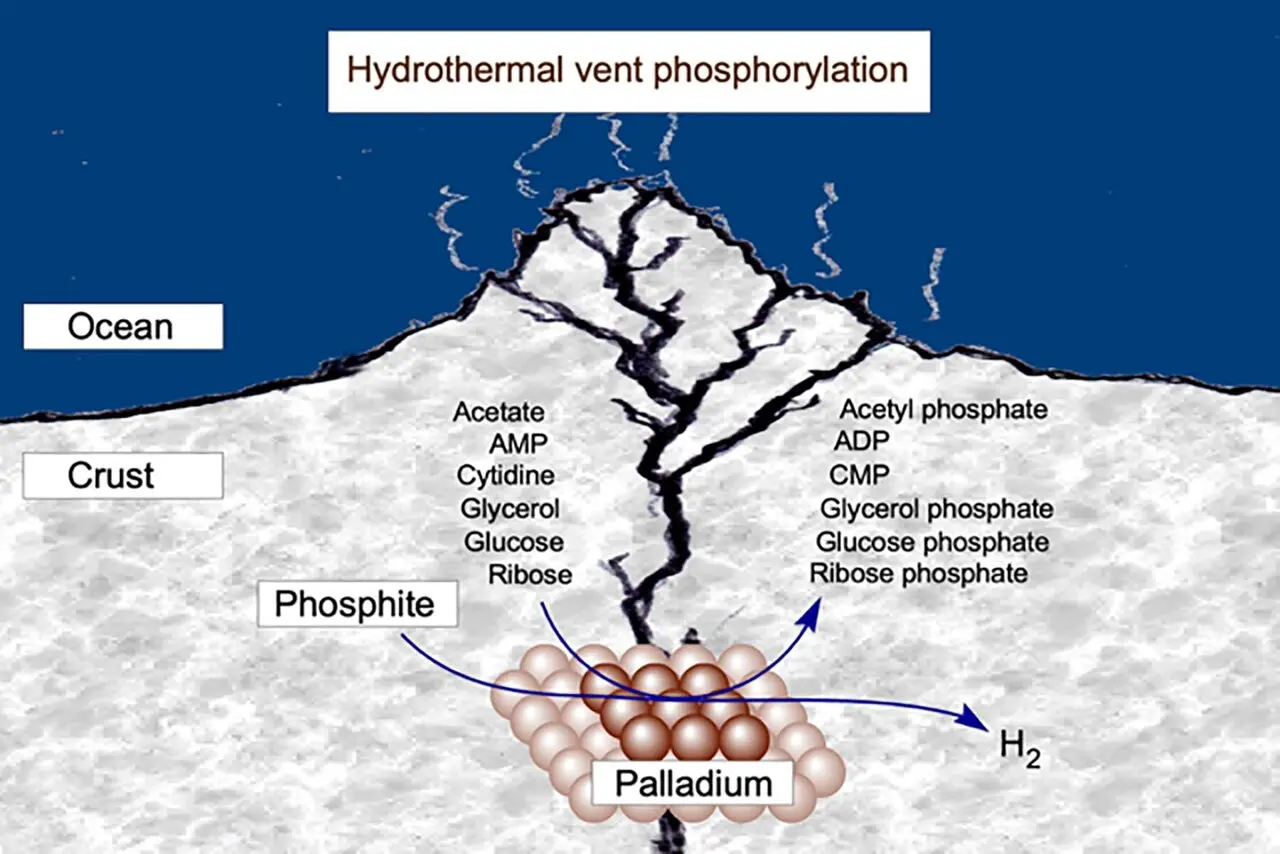
The team studied mineral‑rich fluids emerging from hydrothermal vents on the ocean floor. Their experiments show that the vent chemistry can generate a compound structurally similar to adenosine triphosphate (ATP), the universal energy currency of modern cells. The discovery suggests that life’s first energy system may have arisen from natural chemical processes rather than from sunlight or lightning.
Researchers collected vent fluid samples and exposed them to laboratory conditions that mimic the high pressure and temperature of the deep ocean. They observed that the fluids produced a phosphorylated molecule capable of transferring energy between molecules. This precursor could have driven the synthesis of early biomolecules, providing a stepping‑stone toward the complex metabolism seen today.
Could ATP Have Evolved From a Vent‑Derived Precursor?
The study also traced the origin of phosphate, a key component of ATP, to the same vent environments. Phosphate is abundant in hydrothermal fluids, and the researchers argue that its availability in the right chemical form may have triggered the evolution of ATP as the preferred energy carrier.
The findings raise the question of how the first living systems harnessed this energy. The vent‑derived precursor could have acted as a catalyst, enabling the condensation of simple organic molecules into more complex structures. Over time, natural selection might have refined this system, eventually giving rise to the ATP‑based energy cycle that dominates all known life.
The team plans to investigate whether similar molecules appear in other extreme environments, such as volcanic hot springs, to assess the universality of this mechanism.
The implications are profound. If deep‑sea vents supplied the first energy source for life, it would support the theory that life began in the ocean’s depths, long before the emergence of photosynthetic organisms. Future research may uncover additional chemical pathways that bridged the gap between chemistry and biology.
Frequently Asked Questions
What makes hydrothermal vents special for producing energy molecules? The vents emit hot, mineral‑rich fluids under high pressure, creating conditions that facilitate the formation of phosphorylated compounds similar to ATP.
Does this mean all life started at the ocean floor? While the study supports an ocean‑floor origin, it does not rule out other environments. Further evidence is needed to confirm the exact birthplace of life.
How does this discovery change our view of early metabolism? It suggests that complex metabolic pathways could have evolved from simple, naturally occurring chemical reactions, reducing the need for exotic prebiotic conditions.