Uncovering Hidden Properties
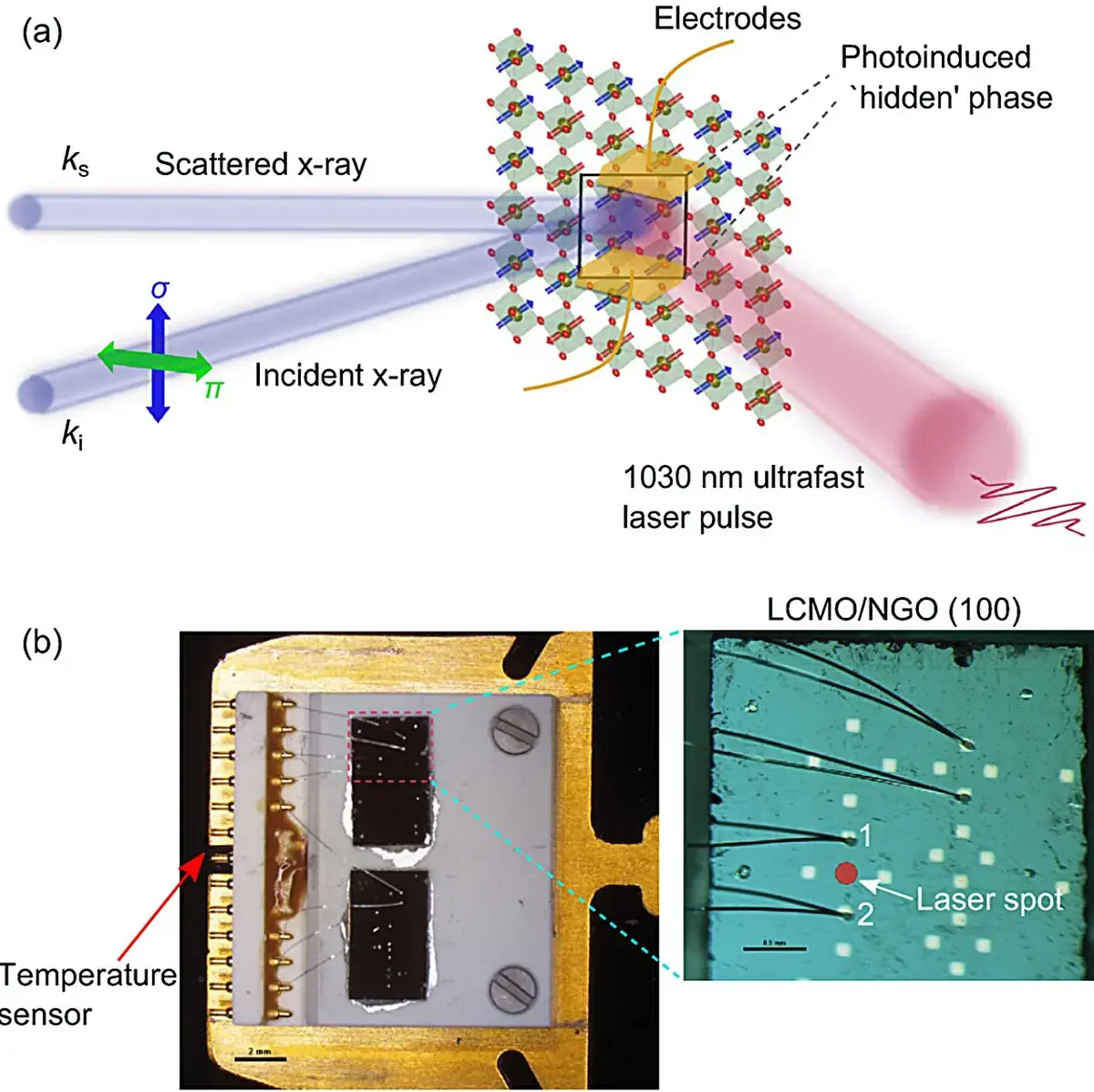
Scientists at Brookhaven National Laboratory used ultrafast laser pulses to uncover a hidden state of matter in a material. This breakthrough discovery was made possible by the lab's advanced laser technology. The research team was led by experts in the field of materials science.
The team used ultrafast laser pulses to transform a material from an electrical insulator into a conductive state. This process occurs on an extremely short timescale, allowing researchers to study the material's behavior in real-time. By doing so, they gained insight into the material's underlying structure.
Can We Harness This Hidden State?
The researchers found that the material's hidden state is characterized by a unique arrangement of its electrons. This arrangement is not observable under normal conditions, but the ultrafast laser pulses allowed the team to seeit. The discovery has significant implications for our understanding of materials science.
The team's findings were made possible by the use of advanced laser technology, which enabled them to study the material's behavior on an ultrafast timescale. According to the researchers, this technology has the potential to reveal new insights into the properties of materials.
The discovery of the material's hidden state raises questions about its potential applications. If scientists can learn to control and harness this state, it could lead to breakthroughs in fields such as electronics and energy storage.
Frequently Asked Questions
The discovery of the hidden state of matter has significant consequences for the field of materials science. As researchers continue to explore the properties of materials, they may uncover new and innovative applications for these materials.
What is the hidden state of matter? The hidden state is a unique arrangement of a material's electrons that is not observable under normal conditions. How was the hidden state discovered? The hidden state was discovered using ultrafast laser pulses that allowed researchers to study the material's behavior in real-time. What are the potential applications of this discovery? The discovery has the potential to lead to breakthroughs in fields such as electronics and energy storage.