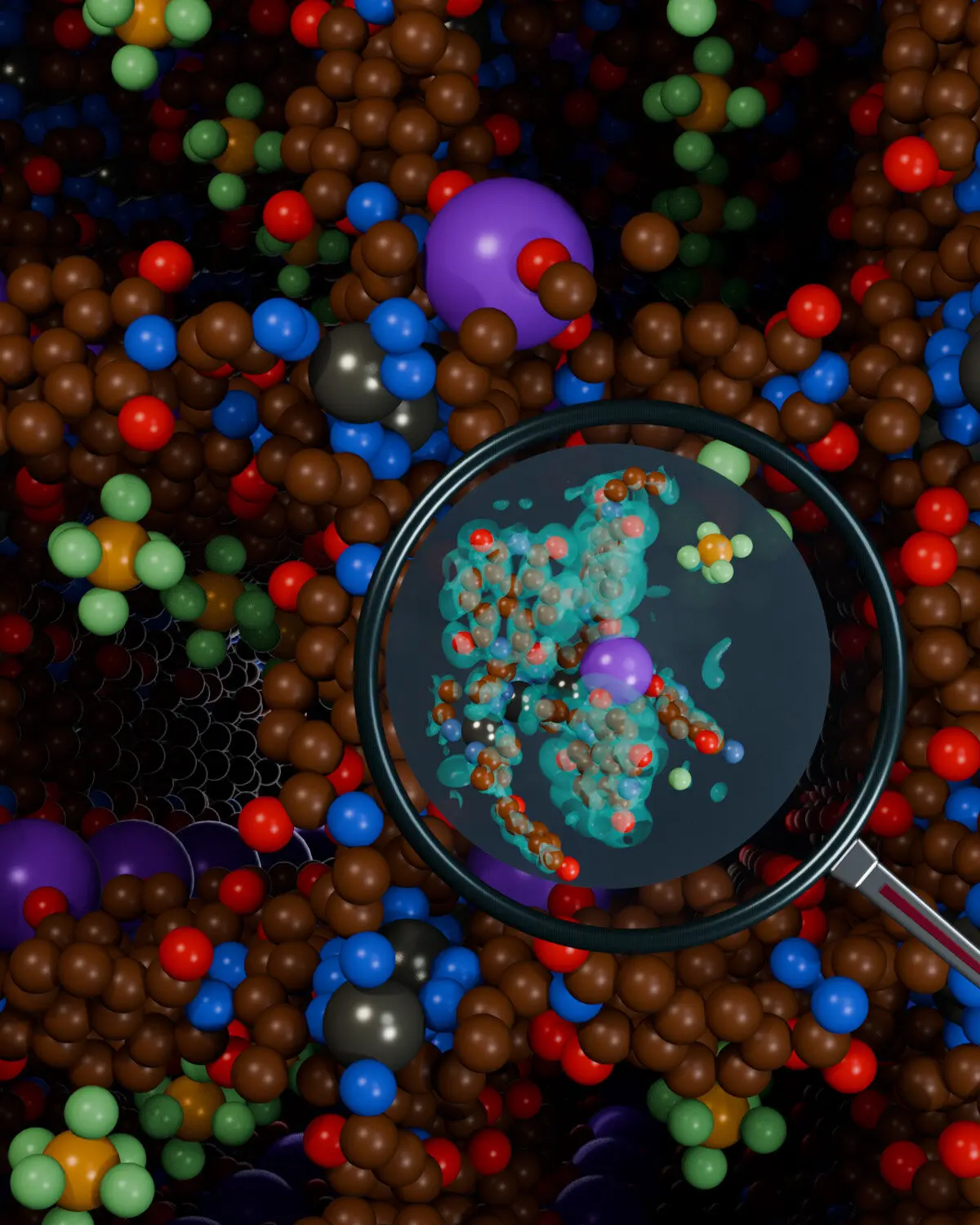
How Ions Create Electron Highways
Researchers at Texas A&M University have discovered that ions can assist electrons in traveling through porous materials, a breakthrough that could advance brain-inspired computing technologies. The study, recently published in a peer-reviewed journal, reveals new insights into how electronic and ionic systems interact at the nanoscale.
The research team found that when ions are present in porous structures, they create pathways that make it easier for electrons to hop between locations. This mechanism mimics how neurons communicate in the brain, where both electrical signals and chemical messengers work together. By combining these two transport methods, the material behaves more like biological tissue than traditional silicon-based electronics.
The porous material used in the study contains tiny channels where ions can move freely. When voltage is applied, ions migrate through these channels and interact with electrons trapped in the material's structure. This interaction reduces the energy barrier that electrons normally face when jumping between sites. Lead researcher Raven Wuebker-Tineo explained that this process allows electrons to travel farther and faster than they could alone. The team measured electron mobility increases of up to 40% when ions were present compared to control samples without ionic components.
Can This Bridge Biology and Electronics?
The findings suggest a new approach to designing computing hardware that operates more like neural networks. Traditional computers process information using electrons alone, but brain cells rely on a mix of electrical and chemical signaling. By incorporating ions into electronic materials, researchers hope to create devices that can adapt and learn in ways that current processors cannot. The porous structure acts as a scaffold, holding both electronic components and ion-conducting elements in precise arrangements. This integration could lead to circuits that self-adjust their connections based on usage patterns, similar to how brains form new neural pathways.
Looking ahead, this discovery opens doors to hybrid electronic-ionic systems that blur the line between living tissue and artificial circuits. Such technology might eventually power robots that think like animals or computers that recover from damage like biological brains do.
Frequently Asked Questions
What makes this material different from regular electronics? It combines ionic and electronic transport, allowing electrons to move more efficiently through ion-assisted hopping mechanisms rather than relying solely on traditional conduction.
How does this relate to brain function? Neurons use both electrical impulses and chemical signals to communicate. This material mimics that dual-mode transport, potentially enabling hardware that processes information more like biological neural networks.
What practical applications are being explored? The technology could lead to adaptive computing systems, self-healing circuits, and brain-machine interfaces that integrate more naturally with neural tissue.