How Does Artificial Turf Affect Tree Health in Arid Climates?
Las Vegas is replacing natural grass with artificial turf in city parks to conserve water during a prolonged drought, a move that began in early 2026 and has sparked debate among residents and environmental groups. The initiative targets over 50 acres of parkland across the city, aiming to reduce irrigation needs by millions of gallons annually. City officials say the shift is necessary to meet strict water allocation limits imposed by state authorities amid declining reservoir levels on the Colorado River.
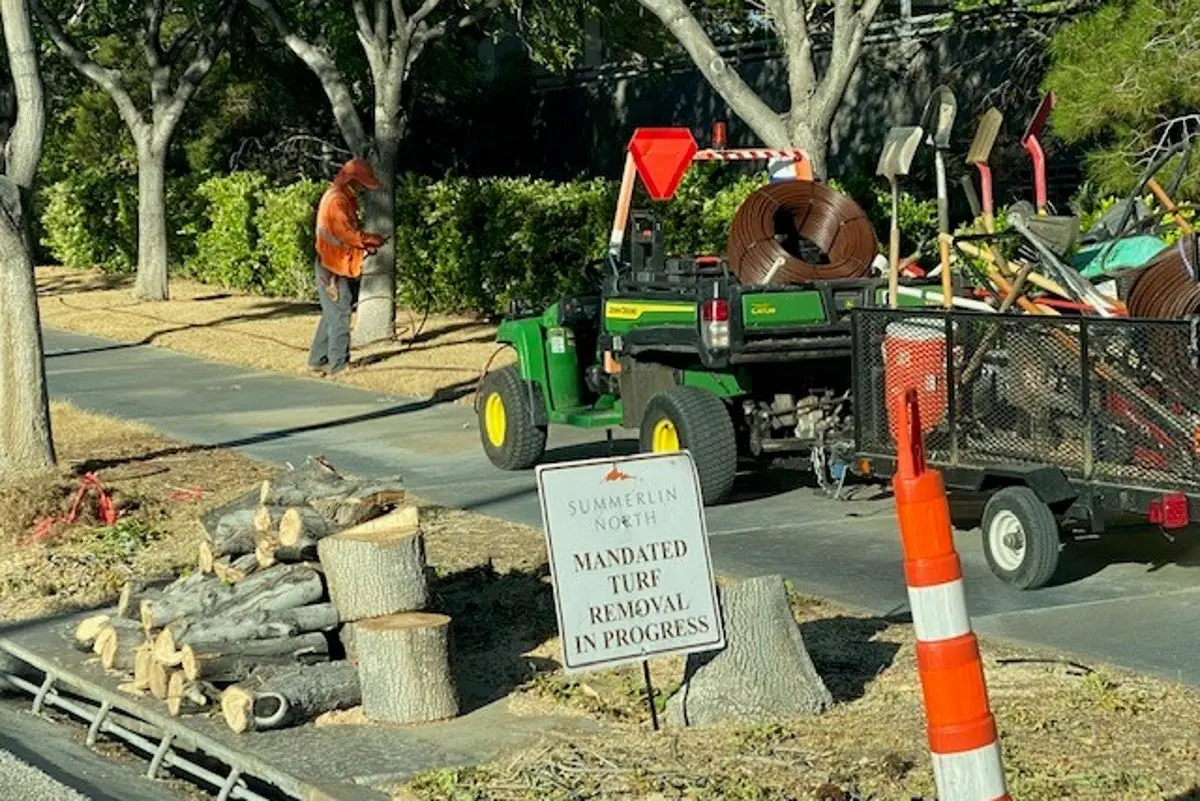
Activists and local residents argue that removing live grass harms mature trees that depend on natural soil moisture and root systems, leading to increased tree stress and potential die-offs. They claim the synthetic surfaces contribute to urban heat island effects, raising temperatures in parks by several degrees compared to grass-covered areas. Isabel Keane, a community organizer with the Desert Green Alliance, stated that the city’s approach overlooks long-term ecological costs in favor of short-term water savings. „We’re trading living landscapes for plastic carpets that bake in the sun and kill the very shade we need,” she said during a public hearing in March.
Can Synthetic Surfaces Truly Save Water in the Long Run?
Experts from the University of Nevada, Las Vegas warn that artificial turf prevents rainwater infiltration and disrupts natural gas exchange in soil, suffocating tree roots over time. Soil compaction beneath the turf layers reduces oxygen availability, making it harder for trees to absorb nutrients. In pilot zones where turf was installed last year, arborists documented a 30% increase in canopy thinning among mesquite and palo verde trees within eight months. The city’s parks department acknowledges these concerns but maintains that supplemental watering via drip lines can mitigate root damage, a solution critics say defeats the purpose of water conservation.
While artificial turf eliminates the need for irrigation, city data shows that maintenance requires periodic cleaning, disinfecting, and cooling with water sprays during extreme heat to prevent surface temperatures from exceeding 160°F. A 2025 study by the Southern Nevada Water Authority found that in peak summer months, the water used for turf cooling offset up to 40% of the savings from not watering grass. Residents in neighborhoods like Summerlin and Henderson have reported discomfort using parks during afternoon hours due to radiant heat radiating from the fields, prompting calls for shaded structures or usage restrictions during peak heat.
Why is Las Vegas prioritizing artificial turf over drought-resistant native plants? Officials cite faster installation and uniform playability for sports fields as key factors, though native landscaping uses less water long-term and supports local biodiversity.
Frequently Asked Questions
Does artificial turf increase heat in urban parks? Yes, studies show synthetic surfaces absorb and retain more heat than natural grass, contributing to higher ambient temperatures, especially in shaded-free areas.
Are there plans to replant trees affected by the turf conversion? The city says it is monitoring tree health and may replace severely damaged specimens, but no large-scale replanting initiative has been announced alongside the turf rollout.