Uncovering the Role of Mechanical Stress
Researchers at the University of Cambridge have made a groundbreaking discovery about how young plants develop. Scientists studied the growth of seedlings to understand how stomata, crucial for gas exchange, form on leaves.
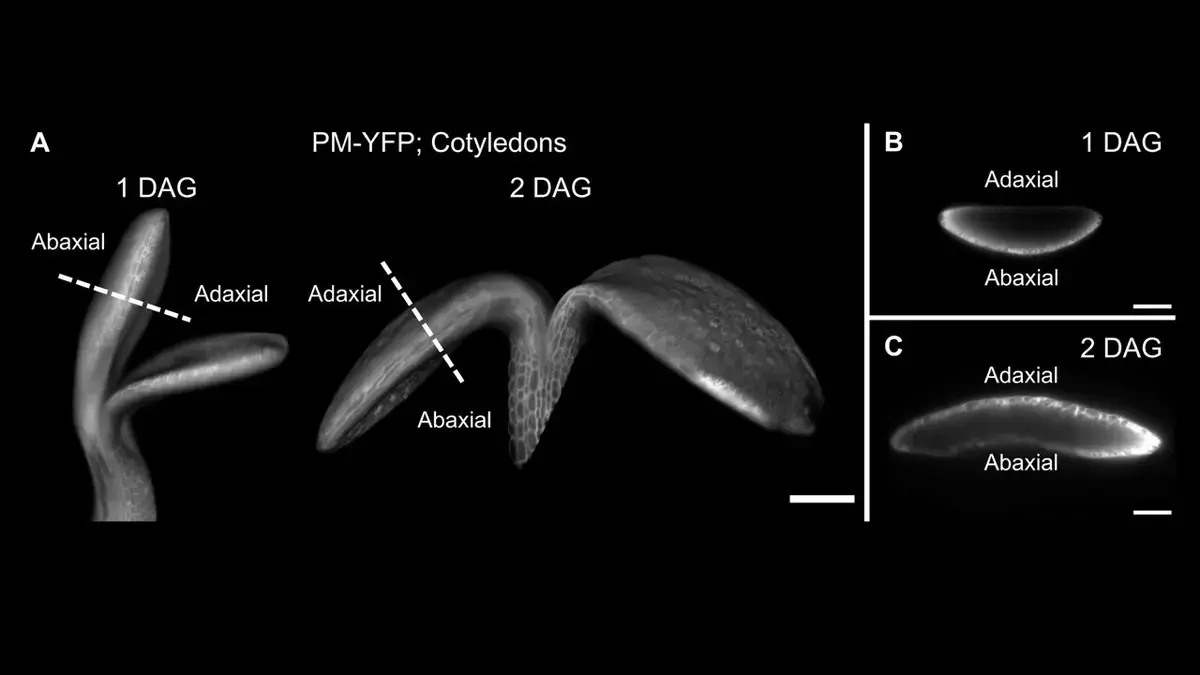
The team used advanced light-sheet imaging to observe the development of cotyledons, the first leaves to emerge from a seedling. This technique allowed them to visualize the mechanical stress patterns within the leaves as they grew and stomata began to form.
As the leaves expanded, the researchers noticed distinct patterns of mechanical stress on the upper and lower surfaces. The stress patterns influenced the shape of cells and, in turn, affected the formation of stomata. The findings suggest that the mechanical forces at play within the leaf help guide the development of these critical structures.
How Do Plants Balance Growth and Gas Exchange?
The scientists observed that the adaxial side, the upper surface of the leaf, experienced different mechanical stresses compared to the abaxial side, the lower surface. This difference in stress patterns was found to be crucial in determining the distribution and development of stomata.
The study's results indicate that the mechanical forces within the leaf play a significant role in shaping the stomata. By understanding how these forces influence stomata development, researchers can gain insights into how plants adapt to their environment.
The discovery has significant implications for our understanding of plant development and could inform strategies to improve crop yields. As researchers continue to explore the intricacies of plant growth, they may uncover new ways to enhance plant resilience and productivity.
Frequently Asked Questions
What are stomata, and why are they important? Stomata are small openings on plant leaves that allow for gas exchange, crucial for photosynthesis and plant growth. They play a vital role in regulating water loss and CO2 uptake.
How do mechanical forces influence stomata development? The mechanical stress patterns within the leaf guide the formation and distribution of stomata, influencing their density and patterning.
Can understanding stomata development improve crop yields? Yes, by gaining insights into the factors that influence stomata development, researchers can develop strategies to enhance plant growth and productivity.