Targeting Abnormal Tissue with Precision
Researchers at Oregon State University have demonstrated that magnetic nanoparticles can effectively diagnose and treat ectopic pregnancies in a mouse model. This breakthrough offers a new approach to managing a life-threatening condition where a fertilized egg implants outside the uterus. The study highlights significant potential for future clinical applications in reproductive medicine.
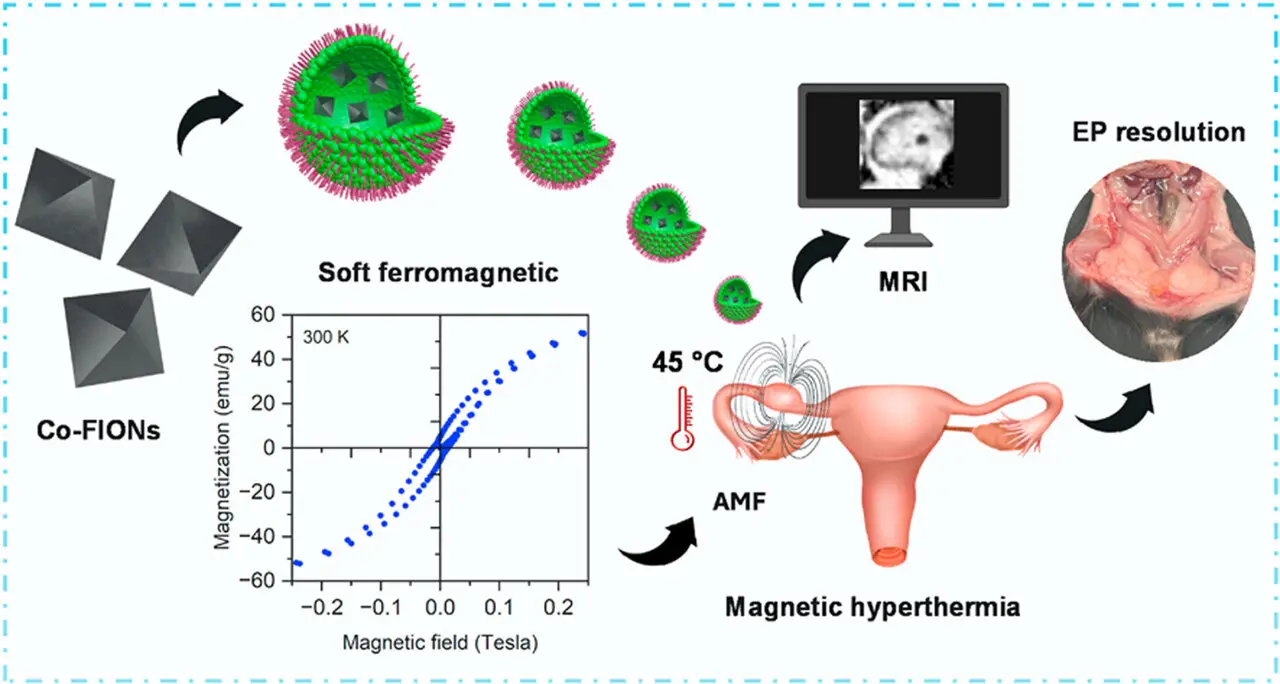
The team, led by a senior scientist at the university, focused on the challenges of detecting early-stage ectopic pregnancies. Current diagnostic methods often rely on blood tests and imaging, which can be inconclusive in very early stages. The researchers developed a technique using nanoparticles that bind specifically to the abnormal tissue. When exposed to a magnetic field, these particles generate heat or signal changes that allow for precise localization of the pregnancy.
The core innovation lies in the ability to distinguish between healthy uterine tissue and the ectopic implantation site. In standard pregnancies, the embryo attaches to the uterine wall. However, in ectopic cases, it usually attaches to the fallopian tubes or other abdominal areas. The nanoparticles used in this study are designed to accumulate at the site of inflammation and rapid cell division associated with the abnormal growth. By applying external magnetic forces, the researchers could track the location of the pregnancy without invasive surgery. This non-invasive tracking method provides real-time data that helps clinicians confirm the diagnosis earlier than traditional methods.
Can This Method Replace Surgical Intervention?
Furthermore, the study explored the therapeutic aspect of this technology. Once the nanoparticles identified the ectopic site, they facilitated targeted treatment. The magnetic properties allowed for controlled heating of the affected area, a process known as hyperthermia. This localized heat damages the abnormal tissue and stops the pregnancy from progressing, thereby reducing the risk of rupture. Rupture is the primary cause of severe complications and emergency surgeries in these cases. The dual function of diagnosis and treatment within a single platform represents a major shift in how such conditions might be managed.
The implications of this research extend beyond simple detection. Traditional treatments for ectopic pregnancy often involve medication or surgery, both of which carry risks and recovery times. The nanoparticle approach suggests a less invasive alternative that could be administered through standard imaging protocols. If the technology translates to human patients, doctors could monitor the treatment progress immediately. The precision offered by magnetic targeting minimizes damage to surrounding healthy organs. This is critical because preserving fertility is a top priority for many patients undergoing treatment for ectopic pregnancies.
Frequently Asked Questions
However, the transition from mouse models to human application requires rigorous testing. The size and biology of mice differ significantly from humans, meaning dosage and timing must be carefully adjusted. Researchers are now working on optimizing the nanoparticle design to ensure safety and efficacy in larger organisms. They are also investigating the long-term effects of magnetic exposure on reproductive health. While the initial results are promising, the team emphasizes that further studies are needed to validate the findings before clinical trials begin.
How do magnetic nanoparticles detect ectopic pregnancy? The nanoparticles bind to the abnormal tissue at the implantation site. External magnetic fields then allow researchers to track their location and induce localized heating for treatment.
Is this treatment currently available to humans? No, the study was conducted on a mouse model. Human clinical trials are planned but have not yet started, so the method is not yet a standard medical option.