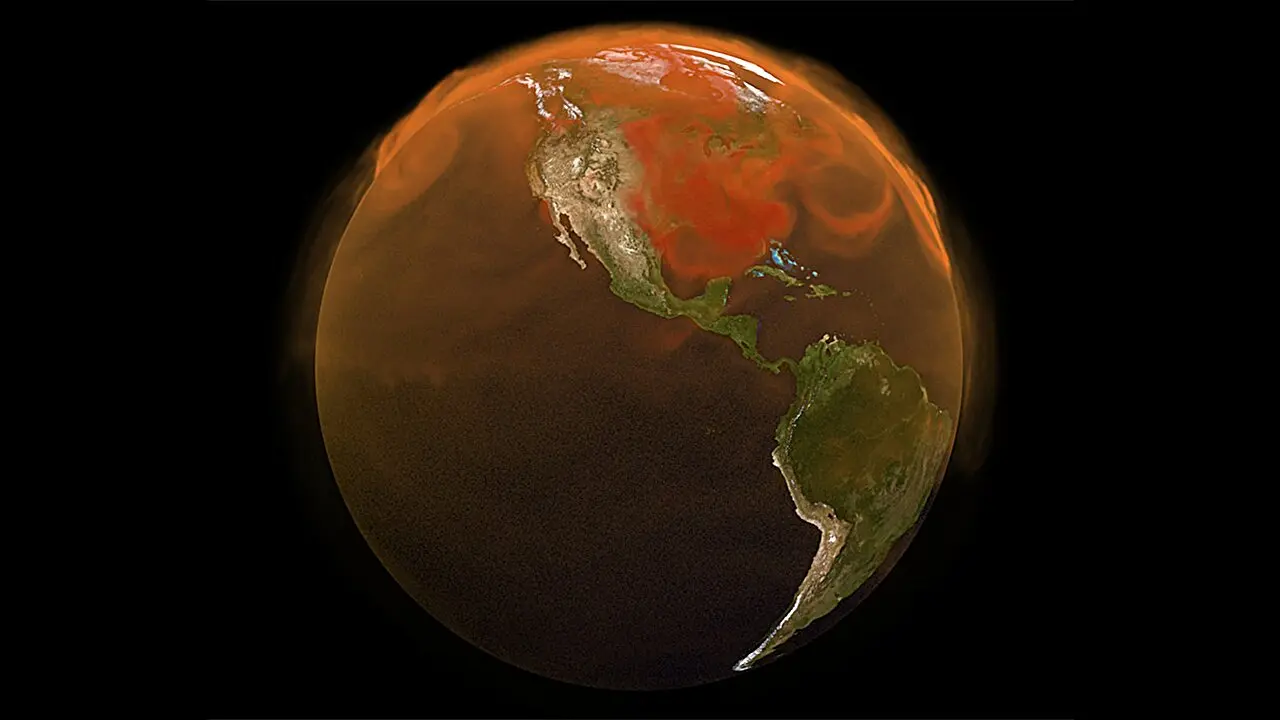
How the instruments measure carbon dioxide
NASA has released an upgraded version of its space-based carbon dioxide dataset, spanning ten years of observations. The data comes from the Orbiting Carbon Observatory-2 and -3 (OCO-2 and OCO-3) instruments, which capture over a million daily observations of sunlight reflecting off Earth's surface.
The instruments measure how sunlight passes through the atmosphere and bounces off the ground. An algorithm then converts these raw measurements into atmospheric CO2 concentrations. This upgraded dataset improves accuracy and consistency for climate scientists.
The OCO-2 and OCO-3 satellites use spectroscopy to detect the specific wavelengths of light absorbed by CO2 molecules. When sunlight reflects off Earth's surface, CO2 in the atmosphere absorbs certain infrared frequencies. The instruments record these absorption patterns, and the algorithm translates them into concentration values.
What the upgrade means for climate research
This method allows scientists to track CO2 levels with high spatial and temporal resolution. The decade-long record now benefits from refined calibration and processing algorithms, making it more reliable for long-term climate studies.
With the improved dataset, researchers can better understand seasonal CO2 cycles, regional emission sources, and long-term trends. The upgrade supports more accurate carbon budget calculations and helps validate ground-based monitoring stations.
Frequently Asked Questions
Climate models now have a stronger observational foundation. As global emissions continue to rise, having a clean, consistent satellite record is essential for tracking progress toward international climate targets.
How often do the OCO satellites observe Earth? The OCO-2 and OCO-3 instruments capture more than a million observations every day, providing near-global coverage.
What does the upgraded dataset improve? The upgrade refines calibration and processing algorithms, increasing the accuracy and consistency of CO2 concentration measurements over the ten-year record.