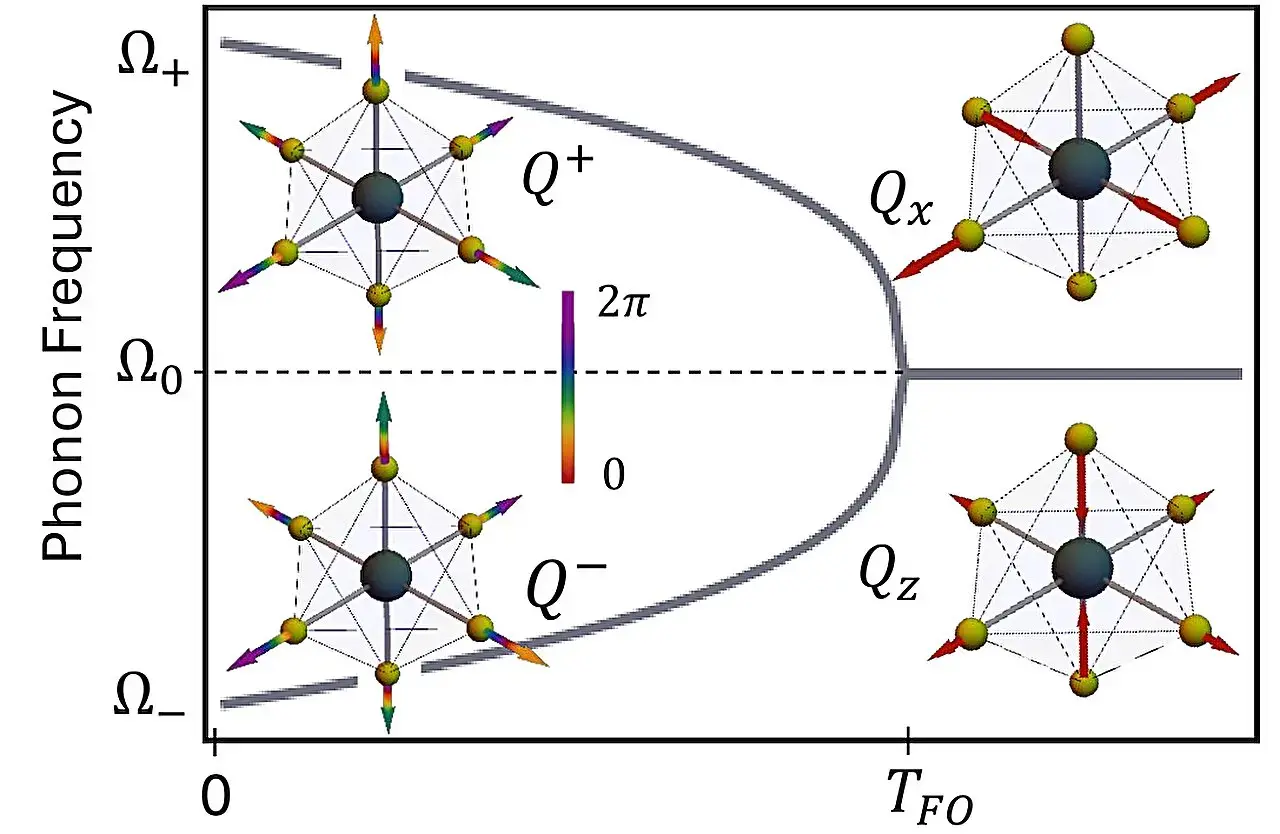
Unseen Magnetic Patterns Defy Conventional Measurement
Researchers at the University of Toronto have identified a new form of magnetism known as octupolar order. This discovery challenges the standard model of magnetic materials that rely on simple dipole arrangements. The team published their findings in a peer-reviewed scientific journal. Their work provides a clearer understanding of how certain magnetic systems behave at low temperatures. This specific type of order does not produce a standard magnetic field. Instead, it creates a complex pattern that is invisible to conventional magnetic sensors. The study focuses on rare-earth compounds that exhibit these unusual properties.
The research team analyzed specific magnetic materials under controlled laboratory conditions. They used advanced spectroscopic techniques to detect subtle changes in atomic alignment. Standard magnets align their moments in pairs, creating distinct north and south poles. Octupolar order involves a higher-order symmetry that cancels out the primary magnetic moment. This means the material can be magnetic without acting like a typical bar magnet. The scientists confirmed this state through detailed theoretical modeling and experimental validation.
How Does This Change Quantum Computing?
Conventional magnetism is easy to visualize and measure. A compass needle points toward a dipole source. However, octupolar states hide their magnetic nature from standard tools. The researchers had to look beyond simple vector fields to find evidence. They observed how the magnetic moments arranged themselves in a three-dimensional grid. This arrangement creates a net zero dipole moment but retains internal structure. Such hidden order is crucial for understanding exotic quantum phases. It suggests that many materials previously thought to be non-magnetic might actually possess complex internal order. The team’s methodology allows for the detection of these faint signals. This opens new avenues for studying other rare-earth elements.
Quantum technologies often require stable, isolated systems. Noise from surrounding magnetic fields can disrupt qubits. Materials with octupolar order offer a potential solution. Because they do not emit strong external magnetic fields, they may serve as better hosts for quantum information. The internal complexity could help protect quantum states from environmental interference. Researchers are now exploring how to integrate these materials into existing quantum device architectures. The stability of this order at ultra-low temperatures makes it particularly attractive. If scalable, this property could reduce error rates in quantum processors.
The discovery shifts the focus of condensed matter physics. It highlights the importance of higher-order multipole expansions in material science. Future experiments will test these predictions in different crystal structures. The team plans to collaborate with industry partners to prototype new components. This work bridges fundamental theory and practical application. Understanding octupolar magnetism may lead to more efficient energy storage solutions. It also provides a new tool for manipulating spin states in solid-state devices. The scientific community is eager to replicate these results in other labs.
Frequently Asked Questions
Is octupolar magnetism stronger than regular magnetism? No, it is not stronger in terms of external field strength. In fact, it produces almost no external magnetic field. Its significance lies in its internal structural complexity rather than raw power.
Can this be used in everyday electronics? Not immediately, but it holds promise for future quantum computers. Current applications are limited to specialized low-temperature environments. Further engineering is required to make it viable for room-temperature devices.