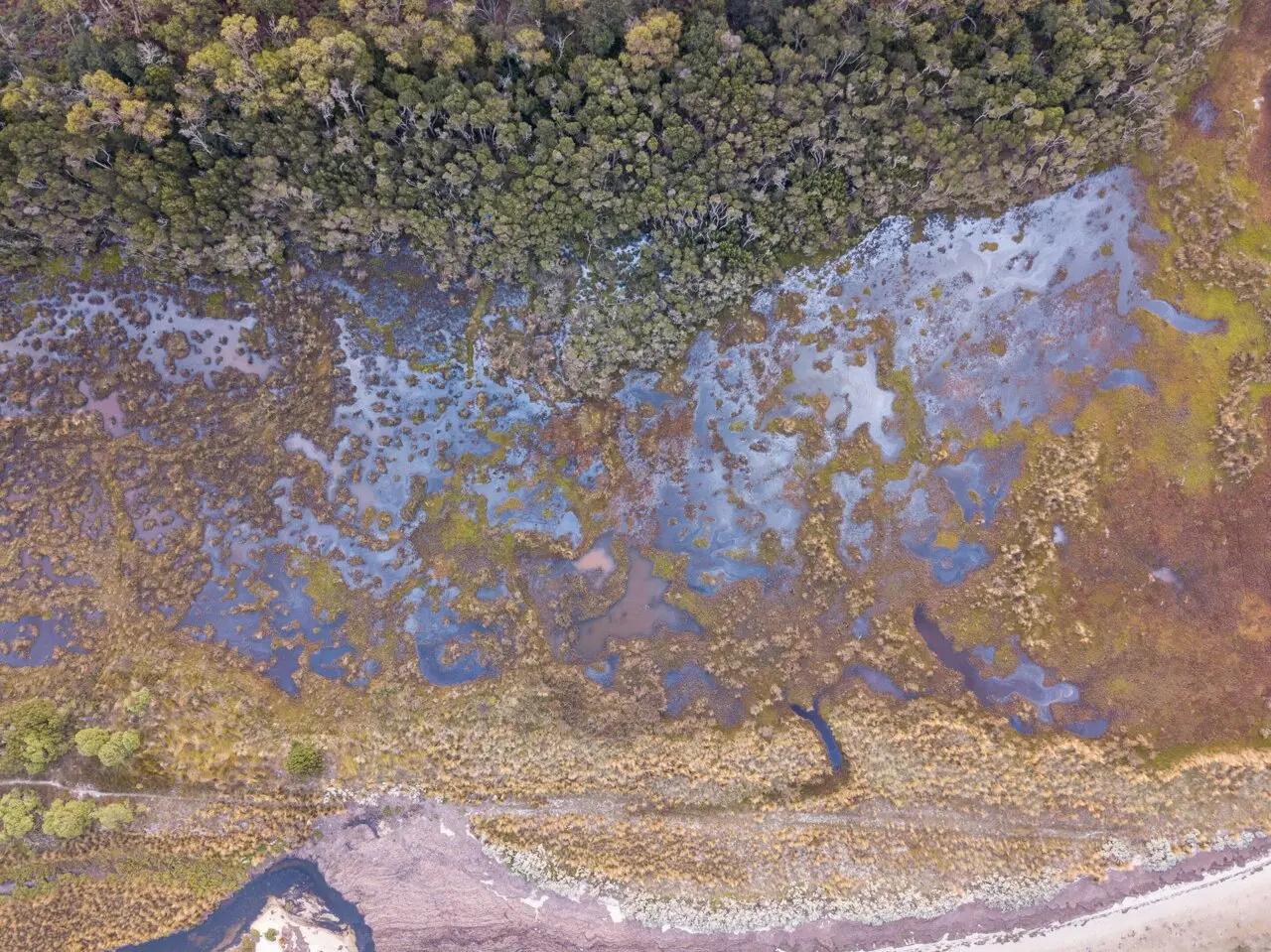
Connectivity Is the Missing Piece
A team of scientists at Monash University has released new research that challenges the traditional focus on protected areas. Their study argues that to meet global biodiversity targets, countries must look beyond the walls of national parks and create connected landscapes that allow species to move freely across the land.
The research, conducted by ecologists and spatial analysts, examined conservation strategies in several countries that have pledged to protect 30 % of their territory by 2030. The team used satellite imagery, species distribution models, and network analysis to assess how well protected areas are linked. Their findings suggest that many protected networks are isolated, limiting the ability of wildlife to adapt to climate change and human pressures.
How Do We Build Integrated Landscapes?
The study shows that simply expanding protected area coverage is not enough. „A patchwork of isolated reserves can act like islands in a sea of development,” explains lead author Dr. Emily Chen. „Species need corridors, stepping stones, and buffer zones to move, breed, and find food.” The researchers identified key corridors that, if protected or restored, could double the functional connectivity of existing networks. They also highlighted that some regions already have high connectivity but are under threat from planned infrastructure projects.
Data from the analysis indicate that in Australia’s northern territories, for example, a network of 1.2 million hectares currently protects 35 % of the land, yet only 12 % of that area is effectively connected. By adding just 200 kilometres of wildlife corridors, connectivity could rise to 30 %. Similar patterns emerged in Southeast Asia and the African Sahel, where fragmented landscapes hinder species migration.
The researchers propose a three‑step approach. First, map existing protected areas and identify gaps in connectivity. Second, engage local communities and landowners to secure buffer zones and restoration projects. Third, integrate conservation planning into national land‑use policies, ensuring that new roads, farms, and settlements do not cut through critical corridors. „Policy alignment is essential,” says Dr. Chen. „Conservation cannot be an afterthought; it must be embedded in every planning decision.”
Will Integrated Landscapes Meet the 30 % Target?
The study also stresses the importance of monitoring. Using remote sensing and citizen‑science data, governments can track changes in habitat quality and corridor usage over time. This feedback loop will allow adaptive management, ensuring that conservation landscapes remain resilient in the face of climate change.
The research suggests that if countries adopt connectivity‑focused strategies, they can achieve the 30 % protection goal while also enhancing biodiversity outcomes. „It’s a win‑win,” notes Dr. Chen. „By linking habitats, we not only protect more species but also strengthen ecosystem services such as water regulation and carbon sequestration.” However, the authors warn that achieving this will require significant investment and political will. Without it, isolated protected areas will continue to fail in delivering long‑term conservation benefits.
What is an integrated conservation landscape? An integrated conservation landscape is a network of protected areas, corridors, and buffer zones that are connected to allow species movement and ecological processes to function across a larger region.
Frequently Asked Questions
How can small countries implement these strategies? Even small nations can map key corridors, engage local stakeholders, and incorporate connectivity into national land‑use plans. International funding and technical support can help bridge capacity gaps.
Will this approach replace existing protected areas? No. Integrated landscapes build on current protected areas, enhancing their effectiveness by ensuring they are part of a larger, connected system rather than isolated islands.