Crew’s Scientific Contributions and Future Plans
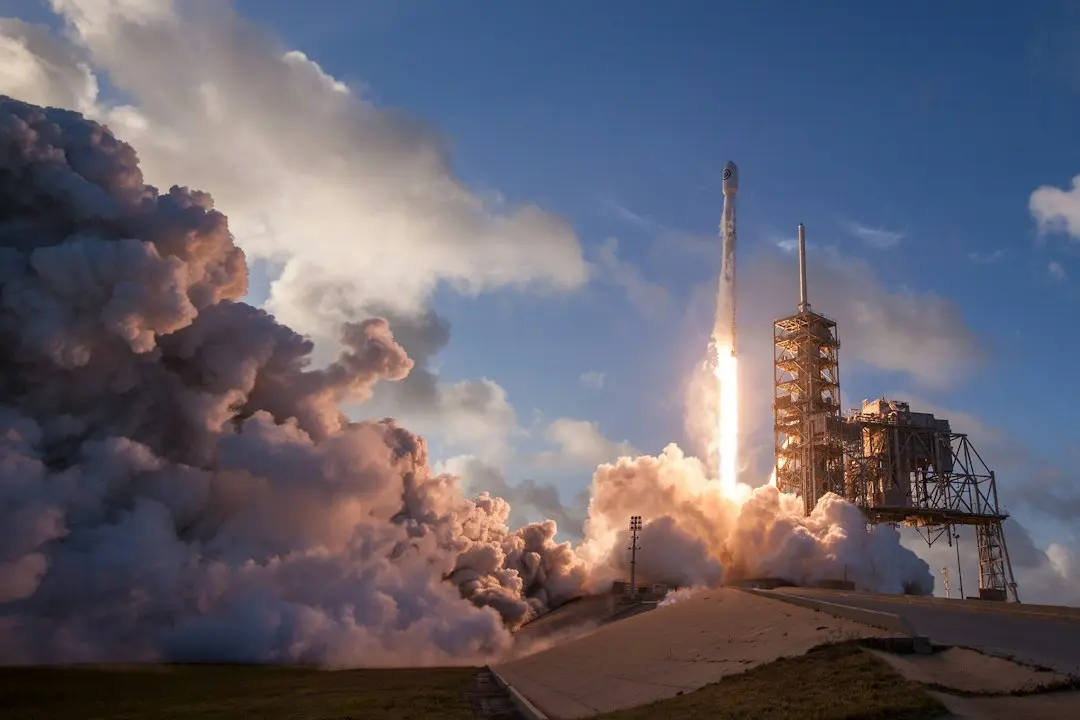
A SpaceX Crew Dragon capsule carrying four astronauts landed safely in the Pacific Ocean off California’s coast on Thursday, marking the end of a week‑long stay aboard the International Space Station. The vehicle returned to Earth after completing a flight that began on Monday, when it lifted off from the Kennedy Space Center.
The crew, consisting of Commander James „Jim” Carter, Pilot Maria Sanchez, and Mission Specialists Li‑Wei Chen and Aisha Patel, spent 168 hours in microgravity conducting experiments in biology, materials science, and human physiology. They also performed a routine maintenance task on the station’s external solar arrays, which is critical for maintaining the ISS’s power supply.
The capsule’s descent was monitored by NASA and SpaceX teams from launch to splashdown. After reentry, the vehicle deployed a parachute system that slowed its descent to a gentle, controlled landing. The splashdown occurred at a depth of about 48 meters, where recovery teams quickly retrieved the capsule and the crew, who were immediately transferred to medical support for post‑flight evaluation.
During their stay, the astronauts collected data on how prolonged exposure to microgravity affects bone density and muscle mass. Chen’s experiment on osteoblast activity suggested that a new drug candidate could mitigate bone loss, a major concern for long‑duration missions. Patel’s work on fluid dynamics in zero‑gravity environments may improve spacecraft life‑support systems. Meanwhile, Carter and Sanchez tested a new robotic arm configuration that could streamline future ISS maintenance tasks.
How Did the Capsule Achieve a Safe Splashdown?
NASA’s mission director, Dr. Elena Ruiz, emphasized that the data gathered will inform the agency’s next steps toward deep‑space exploration. „These experiments are a stepping stone,” she said. „We’re learning how to keep astronauts healthy and how to maintain equipment in space, which are essential for missions to the Moon and Mars.”
The crew has already begun preparations for the next phase of their careers. Carter will serve as commander on the upcoming Artemis III mission to the lunar surface, while Sanchez is slated to lead a joint U. S.‑European research team on the ISS. Chen and Patel will return to NASA’s Johnson Space Center to analyze the experiment results and develop protocols for future crews.
The Crew Dragon’s descent relied on a sequence of precise maneuvers. First, the vehicle fired its thrusters to orient itself for reentry. It then deployed a heat shield to protect against the extreme temperatures of atmospheric reentry. After the capsule passed the most intense heating phase, a series of parachutes opened to slow the descent. Finally, a small splashdown area was chosen based on ocean currents and weather conditions to ensure a safe landing.
Recovery crews, including U. S. Navy and Coast Guard personnel, were on standby at the designated splashdown zone. They used a helicopter to locate the capsule and a small boat to retrieve it. The crew’s rapid transfer to medical support minimized the risk of decompression sickness and other post‑flight complications.
Frequently Asked Questions
The successful landing demonstrates SpaceX’s ability to conduct crewed missions with reliability, reinforcing the company’s role as a key partner in NASA’s human spaceflight program.
What is the significance of the splashdown location? The Pacific Ocean near California was chosen because it offers calm waters, predictable currents, and a well‑established recovery infrastructure, ensuring a swift and safe retrieval of the capsule and crew.
How long will the astronauts be in recovery before returning to work? Typically, astronauts undergo a 14‑day post‑flight medical evaluation. After that, they may resume training or begin new assignments, depending on their mission schedule.
Will the data from this mission influence future SpaceX launches? Yes. The experiments and operational lessons learned will inform design improvements for next‑generation Crew Dragon vehicles and help shape mission protocols for longer, more complex spaceflights.