Unseen Forces Above the Storm
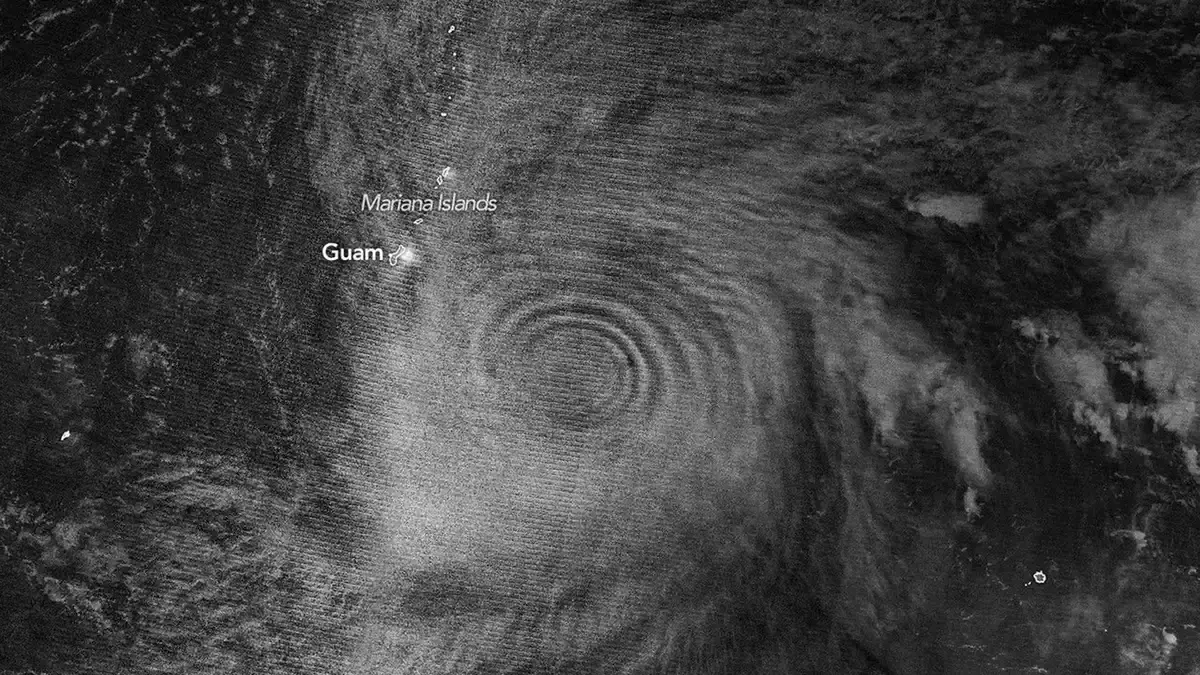
Super Typhoon Sinlaku, an exceptionally strong storm for this time of year, generated atmospheric gravity waves. These waves extended into near-space and were observed by scientists. The event occurred in the Pacific Ocean in early June 2026. NASA’s Earth Observatory reported the findings.
Sinlaku rapidly intensified, becoming a super typhoon unusually early in the Pacific typhoon season. This powerful storm didn’t just bring destructive winds and rain. It also created visible disturbances in the upper atmosphere. These disturbances manifested as atmospheric gravity waves – essentially ripples in the air. Scientists are studying these waves to better understand storm dynamics.
Atmospheric gravity waves are similar to ripples in a pond. They are caused by disturbances in the atmosphere. These disturbances can be created by large-scale weather systems like typhoons. Unlike sound waves, gravity waves travel through the density of the air. They propagate vertically, sometimes reaching into the lower reaches of space. Detecting these waves provides a unique perspective on storm intensity and structure.
Can Gravity Waves Improve Predictions?
The waves generated by Sinlaku were particularly strong and widespread. They appeared as concentric patterns in satellite imagery. This allowed researchers to observe the storm’s energy extending far beyond its immediate area. The phenomenon offers a new method for remotely assessing the power of these massive weather events. It also helps improve forecasting models.
Scientists believe analyzing gravity waves can refine weather prediction models. Current models often struggle to accurately capture the intensity of rapidly intensifying storms. By incorporating data from these atmospheric ripples, forecasters might gain a more complete picture. This could lead to earlier and more accurate warnings. The waves act as a kind of atmospheric fingerprint, revealing information about the storm's inner workings.
The early appearance of such a strong typhoon raises concerns about the upcoming Pacific typhoon season. Climate change is expected to contribute to more frequent and intense storms. Monitoring these events and understanding their atmospheric effects is crucial. It will help communities prepare and mitigate the impacts of increasingly severe weather. The data from Sinlaku will be invaluable in these efforts.
Frequently Asked Questions
What exactly are atmospheric gravity waves? These waves are disturbances in the air, similar to ripples in water. They are caused by large weather systems and can travel high into the atmosphere, even reaching near-space. Scientists study them to learn more about storm behavior.
How are these waves detected from space? Satellites equipped with specialized instruments can detect the subtle changes in atmospheric density caused by gravity waves. These changes appear as patterns in satellite imagery, allowing scientists to map and analyze the waves' characteristics.
Is this the first time gravity waves have been linked to typhoons? While gravity waves are a known phenomenon, observing them so clearly and intensely from a record-early super typhoon is significant. This event provides a unique opportunity to study the connection between storms and atmospheric disturbances.