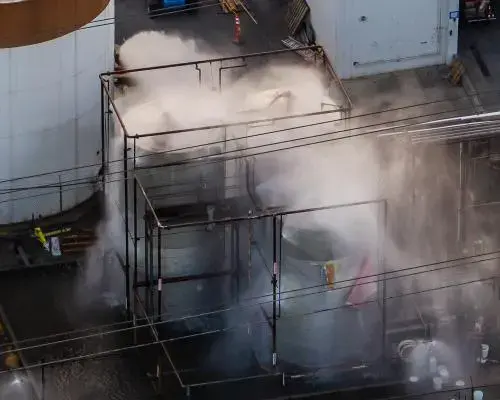
Regulatory Rollbacks Fuel Safety Gaps
The Public Employees for Environmental Responsibility (PEER) released a new analysis showing a sharp rise in chemical incidents across the United States. The study, based on federal incident reports, tracks explosions, fires and other events that release hazardous substances. The data span the past five years, with the most recent figures covering the first half of 2024.
PEER attributes the upward trend to the Trump administration’s systematic dismantling of federal safeguards that once limited industrial chemical releases. By weakening the Emergency Planning and Community Right-to-Know Act and scaling back inspection authority, regulators have left many facilities with fewer checks. Critics argue the policy shift has created a „horrific” environment for communities near plants, where even minor lapses can lead to severe health impacts.
The report highlights that incidents involving toxic releases have risen by roughly 30 percent since 2017. While the total number of reported chemical fires grew from 1,200 to 1,560, fatalities climbed from 45 to 78 in the same period. Injuries requiring hospital care also doubled, indicating more severe exposures. PEER’s analysis points to reduced oversight as a key driver: fewer site inspections, limited enforcement actions, and relaxed reporting thresholds make it harder for agencies to intervene before a disaster unfolds.
Will the Trend Reverse Under New Policies?
State officials and environmental advocates echo the findings. „When you strip away the layers of protection, you invite risk,” said a senior analyst at the state health department. The analyst noted that communities in the Gulf Coast and Midwest, where petrochemical clusters dominate, have reported the highest spikes. Local emergency responders report being stretched thin, often arriving after chemicals have already spread into neighborhoods. The report warns that without renewed federal commitment, the pattern of accidents could accelerate, jeopardizing public health and the environment.
The upcoming administration faces mounting pressure to restore the safety framework that was eroded. Lawmakers have introduced legislation to reinstate mandatory reporting and to re‑empower the Occupational Safety and Health Administration’s (OSHA) authority over chemical plants. If passed, these measures could curb the rising numbers by tightening inspection schedules and increasing penalties for non‑compliance.
However, industry groups argue that excessive regulation could hinder economic growth and that many facilities already follow best‑practice guidelines voluntarily. They contend that a collaborative approach, rather than punitive rules, would better protect workers and nearby residents. The debate centers on balancing economic interests with the need for robust public safeguards. As the policy battle unfolds, the trajectory of chemical accidents remains uncertain, with the next year poised to reveal whether reforms can stem the tide.
If the current deregulation continues unchecked, the United States could see more frequent and severe chemical releases, eroding community trust and imposing costly health burdens. Conversely, a swift policy reversal could stabilize incident rates and restore confidence in industrial safety standards.
Frequently Asked Questions
What types of chemical incidents are increasing? The surge includes explosions, fires, and accidental releases of toxic gases and liquids, all of which can cause injuries, fatalities, and environmental contamination.
How does deregulation affect emergency response? Reduced federal oversight leads to fewer inspections and weaker reporting requirements, leaving emergency crews with less advance notice and limited resources to contain spills quickly.
Can new legislation reverse the trend? Proposed bills aim to strengthen reporting and inspection powers, which experts believe could lower accident rates, though industry opposition may delay implementation.