I've been working in climate communication
Our climate imagination is suffering from a serious crisis
A few months ago, I was in a full-fledged gym, where a group of ten-year-olds were sitting on the scratched floor, their legs crossed. I asked them a simple question: „What does climate change mean to you? The little hands immediately rose up, forming an apocalyptic chorus. One child claimed that the sea would rise and flood the entire territory, while another predicted that the fires would engulf all forests. The end predicted by most was a bleak one: ”We're all going to die. The class was silent until I asked them the second question, „What can we do to stop this? After a brief restless move, a girl timidly proposed the solar panels, and a noisier boy shouted, ”Recycle! . His colleagues confirmed with their heads, but the answers stopped there.
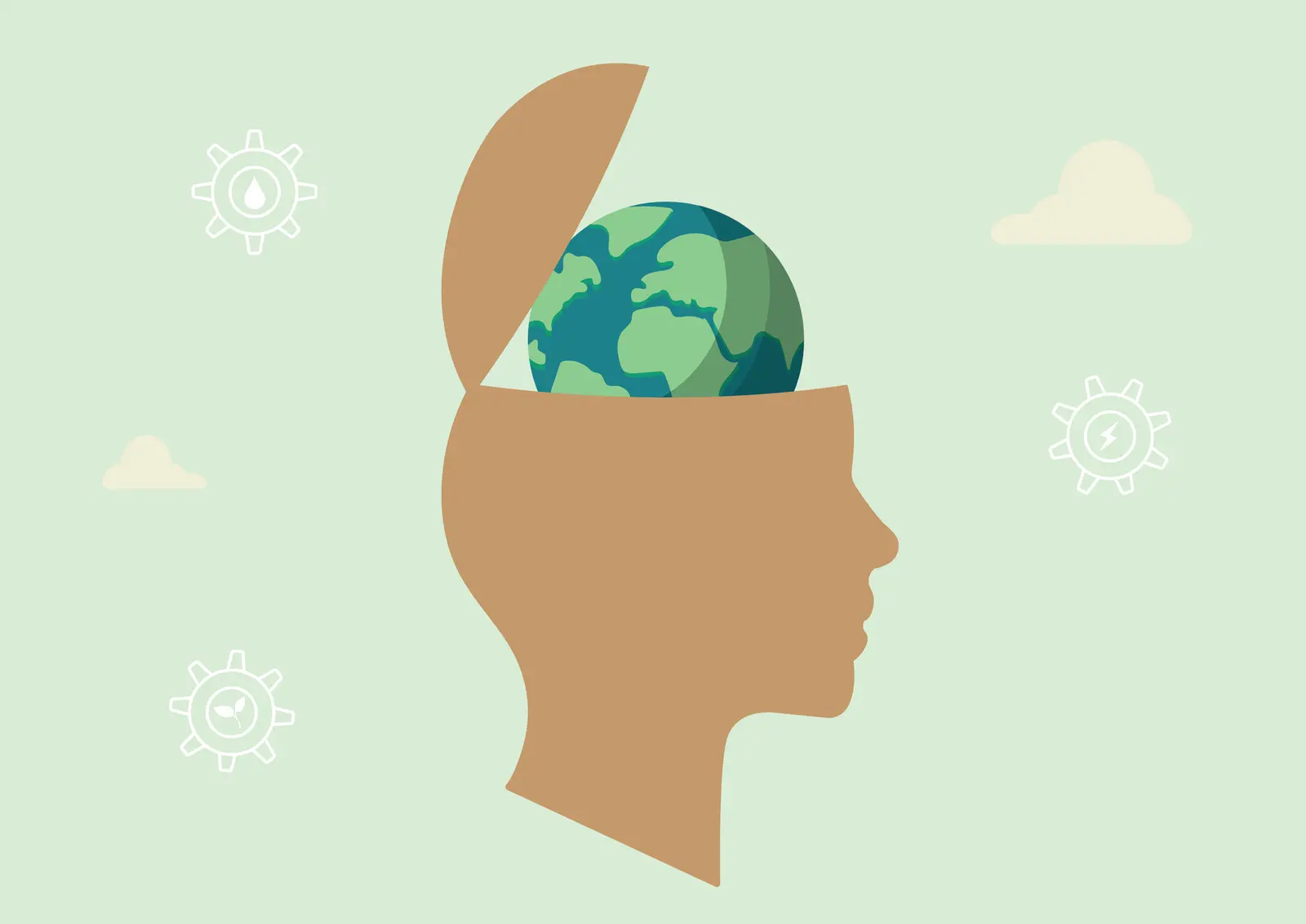
I've been working in climate communication for nearly three decades, alternating between sessions with CEOs, activists and politicians, and discussions with schoolchildren. Over the years, I've seen ten-year-olds develop an increasingly nuanced understanding of the climate crisis they're going to inherit. They can easily imagine flooded cities, endangered species, and a habitable planet, often with an understanding of climate science superior to that of top managers. However, when I challenge them to imagine their concrete solutions, their extraordinary imagination is suddenly reduced to a recycling bin.
I want to emphasize that I'm an enthusiastic supporter of recycling, but I don't think it's enough as a single response to a planetary emergency. I understand why I keep hearing this limited response. Ever since the greenhouse effect and global warming came to public consciousness in the 1980s, we've been giving people an ever more detailed map of the apocalypse without clearly outlining a way out. The climate movement, of which I am proud to be a part, was complicit in this communication crisis. Most of the messages conveyed by progressive forces are just an ad nauseam repetition of the idea that climate change is real, that man is to blame, and that the consequences are catastrophic. I call this mental framework „deserved dystopia”, which is so ubiquitous that most pre-teens can recite these phrases in reflexes. After all these years, can't we imagine a different story?
Long before humans measured atmospheric carbon, we
One reason for this lack of imagination is the way the narrative has always been treated like a teaspoonful of sugar meant to help scientific medicine be swallowed up. Narrators are being asked to act as the marketing department of climate science. But if this subservient role was ever necessary, it becomes increasingly useless now that climate change is starting to communicate itself. The growing number of terrible floods, fires, storms and droughts are capturing the headlines without my help. We have a clear science and a raw direct experience of the phenomenon, so why didn't politicians and the public react? The logic of the climate crisis is obvious. What's missing is magic.
Long before humans measured atmospheric carbon, we whispered stories about floods and fires. Stories have always helped us understand who we are and what we can transform. More and more researchers are demonstrating this unique power of stories to trigger ideas, possibilities, and acts of imagination. I think part of this magic comes from the purpose of stories to purge emotions, not evidence. Today, we don't lack information about heat pumps, electric vehicles, or renewable agriculture. More details than you might want are just a click away. What we lack is an emotional architecture for change; what it's like to want a different future and believe you can achieve it.
Here, an excellent narrative could change everything. Our ability to get into a story and temporarily experience a character's world like ours is called narrative transportation. Studies show that this experience of feeling alongside fictional characters can directly influence the attitudes, intentions, and even behaviors of real people. Few other mechanisms can achieve the same effect. Climate policy felt this power, but it translated it into the narrower language of „public narrative”. Politicians are now planning stories for electrification and renewable sources. Activists are building counternarratives against fossil fuels. Brand teams test sustainability narratives against each other. In climate circles, everyone is looking for the breakthrough narrative that will ultimately unlock the action. But too often the term is just a code for messaging. And messaging is not the same as mythology.
A political narrative tells us how to understand a problem, while mythology helps us understand ourselves. And climate change