Investigation Focuses on Possible Laboratory Accident or Undetected Pathogen
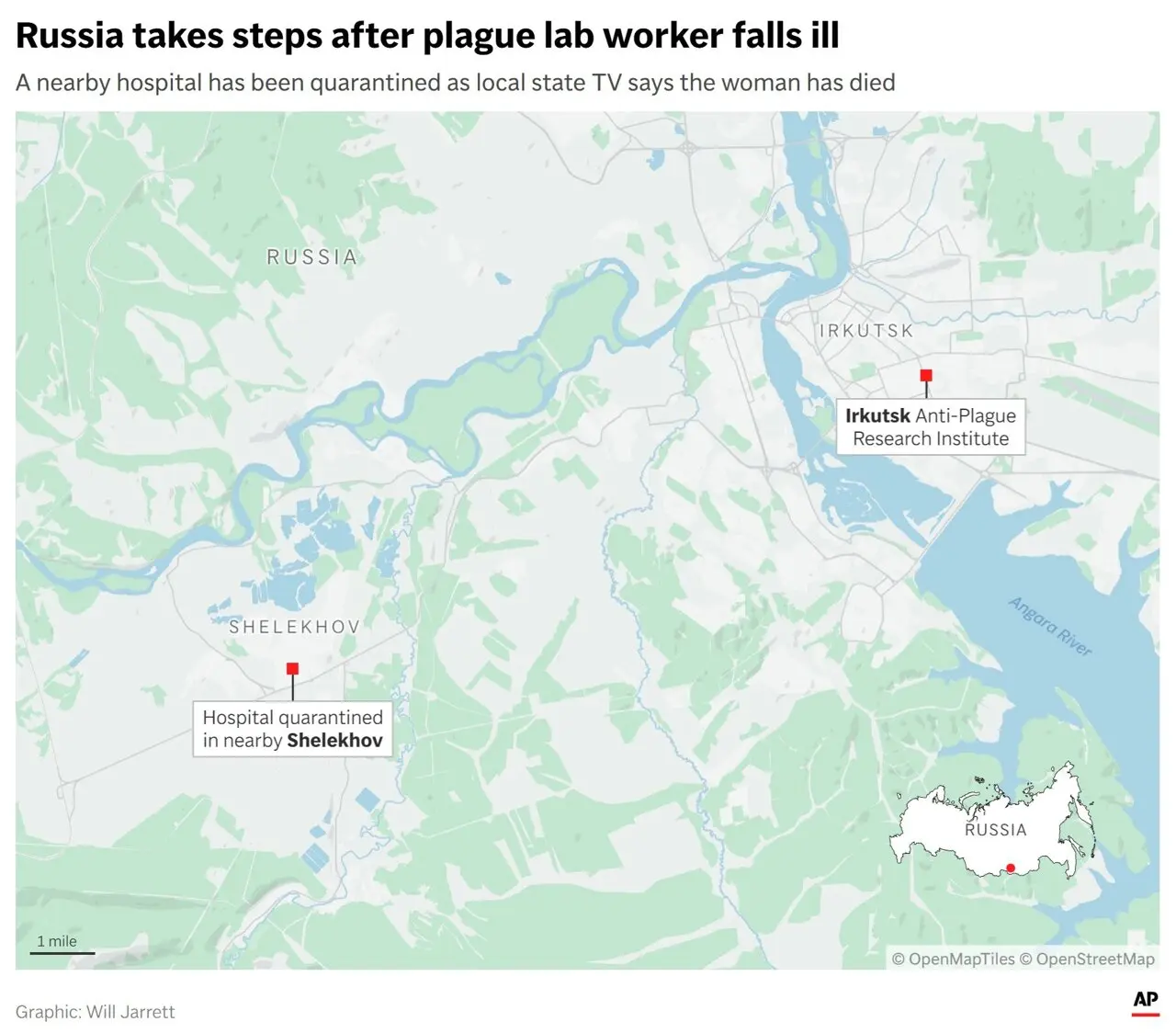
A laboratory worker at the Irkutsk Anti-Plague Research Institute in Siberia developed pneumonia of unknown origin and died, prompting Russian health officials to quarantine a nearby hospital and monitor close contacts. The incident occurred in early November, with authorities confirming the case after the employee sought medical care for severe respiratory symptoms. The institute, which handles dangerous pathogens including Yersinia pestis, the bacterium that causes plague, immediately activated biosafety protocols. Regional health authorities stated the worker had no known exposure to plague agents during routine duties, deepening the mystery surrounding the infection’s source.
Officials are reviewing safety procedures at the institute to determine whether a breach in containment protocols led to the worker’s exposure. Although no plague bacteria were detected in initial tests, experts are considering the possibility of an unknown or atypical pathogen. The quarantined hospital in Irkutsk has been placed under strict infection control, with all staff and visitors screened for symptoms. Epidemiologists are tracing the worker’s movements and interactions over the past two weeks to identify any potential transmission chains. No additional cases have been reported among contacts so far, but monitoring continues as a precaution.
Could This Incident Reveal Gaps in High-Containment Lab Oversight?
The death has raised concerns about oversight at facilities handling lethal pathogens, particularly in remote regions where resources may be limited. While Russia maintains a network of anti-plague institutes dating back to the Soviet era, questions persist about modern biosafety standards and emergency response readiness. International health agencies have not been formally notified, as the case does not yet meet criteria for international alert under current protocols. Nevertheless, the event underscores the risks inherent in pathogen research and the need for transparent reporting when incidents occur.
What is the Irkutsk Anti-Plague Research Institute known for? The institute specializes in studying plague and other zoonotic diseases, maintaining reference strains of Yersinia pestis for diagnostic and vaccine development purposes.
Frequently Asked Questions
Was the worker infected with plague bacteria? No, laboratory tests have not detected Yersinia pestis or other known plague agents in the worker’s samples, leaving the cause of pneumonia unidentified.
Are there signs of wider infection among staff or the public? As of now, no secondary cases have been confirmed among close contacts or the general population, and the quarantined hospital remains under observation with no outward spread detected.