War Escalates Amid Escalating Missile Threats
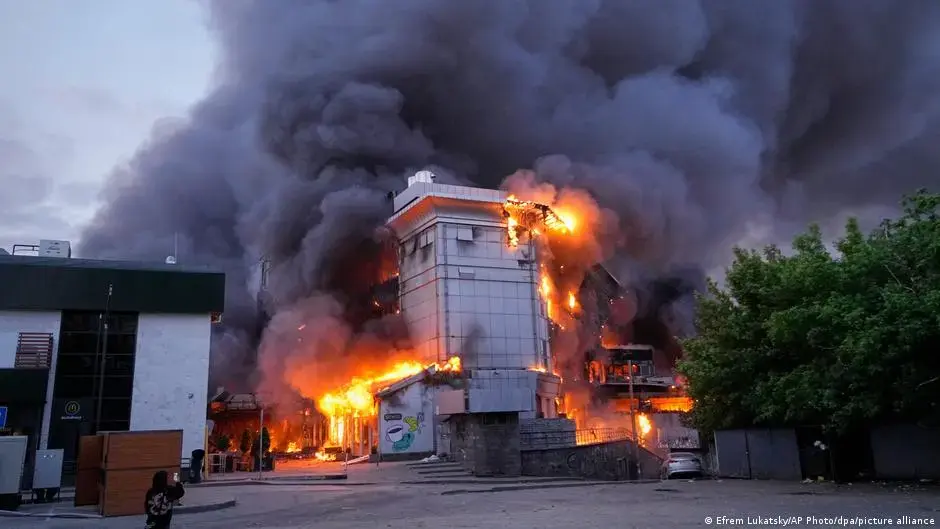
Russia launched a major ballistic missile attack on Kyiv on May 24, 2026, killing at least one person. The strike followed Moscow’s warning of harsh retaliation against recent Ukrainian military actions. Debris from intercepted missiles set fire to a school compound in the capital.
The attack marked one of the largest missile assaults on Kyiv in months. Ukrainian air defenses engaged multiple incoming projectiles, but some warheads reached the city. Emergency crews responded to fires and structural damage, particularly in the northern districts. Satellite imagery and eyewitness reports confirmed the impact site near a school, where flaming debris caused secondary burns but no mass casualties among students.
Ukrainian officials confirmed the use of intermediate-range ballistic missiles, likely launched from Russian territory. Early analysis suggests the weapons targeted command infrastructure, though the exact military objective remains unclear. The General Staff reported that air defense systems destroyed several missiles mid-flight, preventing broader destruction. „This was a precision strike aimed at destabilizing the capital,” said a defense spokesperson, speaking on condition of anonymity.
Could This Signal a New Phase in Urban Warfare?
The timing of the attack followed Russia’s formal statement hours earlier, vowing „proportional and decisive” response to Ukraine’s cross-border operations in Belgorod and Kursk. Ukrainian forces had conducted drone raids and sabotage missions in those regions earlier in the week, damaging radar installations and fuel depots. Russia labeled the actions „acts of terrorism,” using the term to justify the Kyiv strike under its doctrine of asymmetric retaliation.
While Kyiv has faced missile barrages since 2022, the use of ballistic missiles—faster and harder to intercept than drones—raises concerns about a tactical shift. Ballistic missiles can carry larger warheads and strike within minutes, reducing civilian warning time. Analysts note that increased targeting of educational sites, even indirectly, may violate international humanitarian law.
„This incident underscores the growing risk to urban centers,” said a NATO-affiliated defense analyst not authorized to speak publicly. „If ballistic strikes become routine, air defense gaps could lead to higher casualties.” Ukraine has since requested additional interceptor systems from Western allies, including longer-range Patriot batteries.
Damage assessments are ongoing, but initial reports show shattered windows, damaged vehicles, and scorched grounds at the school site. The victim, a maintenance worker, died from burns sustained while evacuating the area. No children were present at the time. Ukrainian President Volodymyr Zelenskyy condemned the attack, vowing continued resistance. „They strike our schools, we strengthen our resolve,” he said in a brief address.
Frequently Asked Questions
Why did Russia target Kyiv with ballistic missiles? Russia cited recent Ukrainian attacks on military sites in its southern regions. Officials claimed the strike was a direct response to what they described as terrorist operations, aiming to deter further incursions.
Were any schools damaged in the attack? Yes, debris from an intercepted missile landed on a school’s grounds, causing fires. The building sustained minor structural damage, but no students were injured as the site was empty at the time.
How effective was Ukraine’s air defense? Air defenses intercepted several missiles, limiting the impact. However, the speed of ballistic missiles challenges even advanced systems, highlighting gaps in urban protection.