From Cabins to Cohesion: Rethinking Premium Experience
Cathay Pacific has removed the private cabanas from its First-Class lounge at Hong Kong International Airport. The change, confirmed in May 2026, marks a shift in how the airline defines premium travel. The focus is no longer on isolated luxury pods but on a unified, scalable design language across all customer touchpoints.
The move reflects a broader strategy: replacing one-off luxuries with a consistent, network-wide design system. Instead of investing in rarefied spaces few travelers experience, Cathay is standardizing high-end aesthetics and service logic across lounges, cabins, and digital interfaces. This „design operating system” ensures that even business-class passengers feel the brand’s premium ethos. The goal is cohesion, not just opulence.
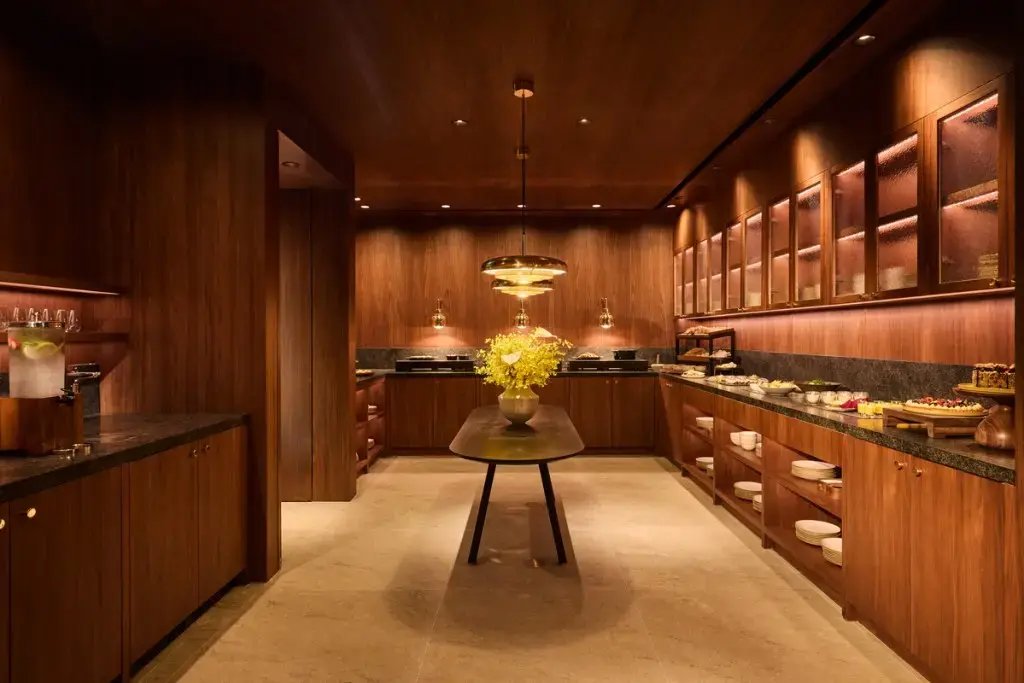
The Wing First Class Lounge, reopened earlier in 2026, now emphasizes open, flexible spaces over enclosed cabanas. Natural materials, ambient lighting, and seamless service flow define the new aesthetic. Designers worked to eliminate visual clutter and create intuitive navigation through zones for dining, relaxation, and work.
Colin Nagy, a travel and brand strategist, noted the change signals a maturation in luxury travel. „Private cabanas were symbolic of an era where exclusivity meant separation,” he said. „Now, exclusivity is about refinement, consistency, and ease.” The new layout allows staff to deliver personalized service more efficiently while maintaining a serene atmosphere.
Is Privacy Losing Its Place in Luxury Travel?
Data supports the pivot. Less than 2% of Cathay’s passengers used first-class lounge cabanas annually, while over 18% accessed business and premium economy services. By elevating the experience across tiers, the airline maximizes impact without inflating costs.
The removal of cabanas doesn’t mean comfort is compromised. Instead, privacy is reimagined through acoustic shielding, strategic seating, and digital concierge tools that reduce physical barriers. Travelers still access quiet areas, but without the fortress-like isolation of earlier designs.
This aligns with global trends. Airlines like Singapore and Lufthansa have introduced similar open-plan lounges, prioritizing fluid movement and multi-sensory design. The emphasis is on holistic well-being—lighting that mimics circadian rhythms, noise-dampening materials, and curated scent profiles.
Frequently Asked Questions
Cathay’s approach suggests that true luxury is no longer about hiding from the world, but about feeling effortlessly cared for within it. The airline’s investment is less in physical artifacts and more in repeatable, scalable experiences that resonate across cultures and customer segments.
Why did Cathay Pacific remove the first-class cabanas? The airline shifted focus from exclusive, underused spaces to a unified design system. The goal is to deliver consistent premium experiences across all travel classes, not just for a tiny fraction of passengers.
What replaces the cabanas in the new lounge design? Open, flexible zones with acoustic privacy, ambient lighting, and improved service flow. Seating offers seclusion without isolation, using layout and materials to create calm.
Will other airlines follow this model? Many already are. Singapore Airlines and Lufthansa have adopted similar open, sensory-driven lounge concepts. Cathay’s approach reflects a broader industry move toward scalable, holistic luxury.