Unlocking Helix Control
Researchers at the Institute of Experimental Physics SAS have discovered a hidden threshold that allows for precise control of liquid crystal helices. Liquid crystals are a crucial component in modern technology, used in displays and advanced sensors. This breakthrough has significant implications for energy-efficient technologies.
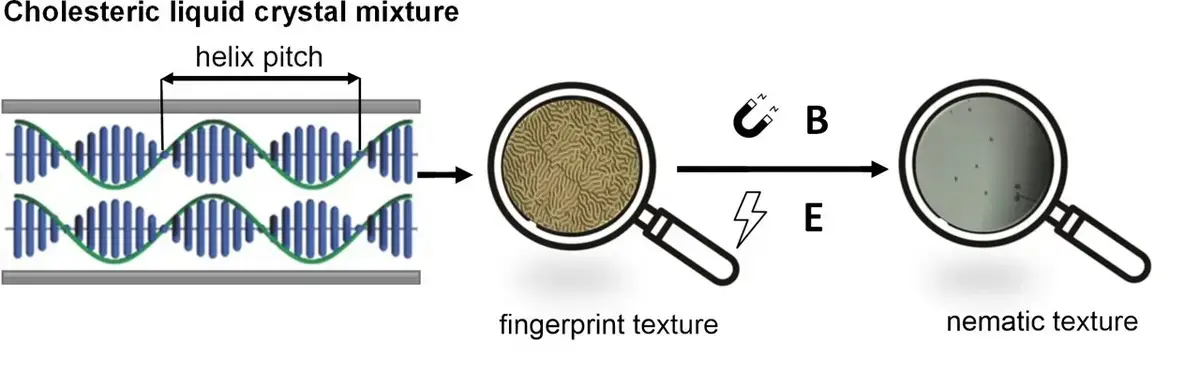
The study focused on the helical structure of liquid crystals, which is characterized by a defined helix pitch and fingerprint texture. By understanding the underlying mechanisms, scientists can now manipulate the helix to achieve desired properties. The discovery of a hidden threshold enables tunable control, allowing for more efficient use of liquid crystals in various applications.
The researchers found that by applying specific conditions, they could influence the helix pitch and achieve the desired level of control. This is a significant advancement, as it enables the creation of liquid crystals with tailored properties. The team is optimistic that this discovery will lead to the development of more energy-efficient technologies.
Can Liquid Crystals Revolutionize Display Technology?
The potential applications of this breakthrough are vast, ranging from improved displays to advanced sensory systems. With the ability to precisely control liquid crystal helices, manufacturers can create more efficient and effective devices. This could lead to significant reductions in energy consumption and improved performance.
The discovery of a hidden threshold in liquid crystal helices is expected to have far-reaching consequences for the development of energy-efficient technologies. As researchers continue to explore the possibilities of this breakthrough, we can expect to see innovative applications in various fields.
Frequently Asked Questions
What are liquid crystals used for? Liquid crystals are used in displays and advanced sensors. They are a crucial component in modern technology.
How does the discovery of a hidden threshold impact liquid crystal technology? The discovery enables tunable control of liquid crystal helices, allowing for more efficient use in various applications.
What are the potential applications of this breakthrough? The potential applications include improved displays, advanced sensory systems, and other energy-efficient technologies.