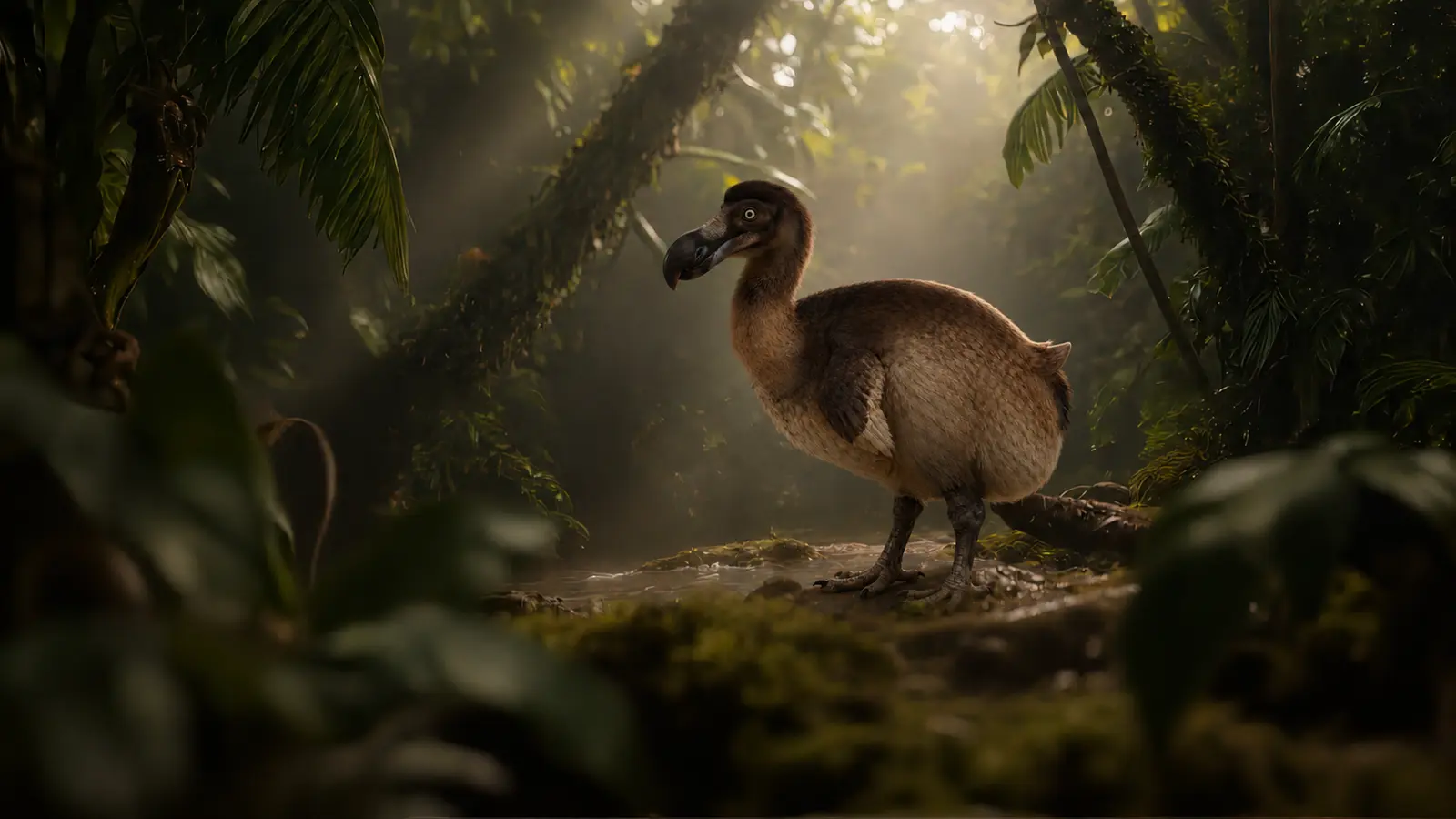
AI’s Role in De‑Extinction
Artificial intelligence has become central to efforts to bring extinct species back. Despite critics who fear AI’s potential harm, Colossal’s researchers argue that AI is essential for filling gaps in the dodo’s fragmented genetic record. Ben Lamm, CEO and co‑founder, explained that de‑extinction is as much a data problem as a biological one. AI learns how regulatory DNA shapes living birds and then identifies the genetic switches that likely gave the dodo its unique anatomy.
Colossal’s Track Record
Colossal’s reputation grew in 2025 when the team announced success in reviving the dire wolf, an extinct predator. They sequenced ancient dire wolf DNA and used it to rewrite the genome of the living gray wolf, resurrecting the species that went extinct over 10,000 years ago. The company now targets other iconic animals, including the woolly mammoth, the Tasmanian tiger, the moa, and the quagga.
Challenges of the Dodo’s Genome
The dodo’s genetic material is highly fragmented. Only a few old DNA samples exist, and they have degraded over centuries. AI’s analytical power is crucial for reconstructing the missing portions of the genome. Researchers must edit thousands of regulatory elements that control traits such as beak shape and size. For the beak alone, there are over 650 elements linked to size and nearly 1,700 to thickness and width.
The team will start by harvesting primordial germ cells (PGCs) from the Nicobar pigeon, the dodo’s closest living relative. These cells will be edited to incorporate dodo‑specific traits and then injected into the shell of a domestic chicken egg. The PGCs will migrate to the developing embryo’s gonads. When the edited chick hatches, it will breed with another edited individual, producing dodo eggs.
From Pigeons
Anna Keyte, Colossal’s avian species director, explains the preference for chicken eggs. Pigeons lay only a few eggs each season, whereas chickens can produce nearly one per day. Using chickens as hosts allows researchers to obtain many more eggs for the de‑extinction process.
Why Chicken Eggs?
To tackle the complex task of editing PGCs, Colossal developed GenoMorph, an AI platform that fills gaps in the dodo’s genetic record. Scientists built an atlas showing how facial development switches activate and deactivate across various bird species, including chickens, quail, ducks, and pigeons. By comparing genomes and skull shapes of over 70 species, they identified roughly 2,350 regulatory elements relevant to dodo traits.
GenoMorph: AI’s New Tool
If successful, the dodo could return to the wild within a decade. Colossal’s work illustrates how AI can bridge the data gaps that have long hindered de‑extinction projects, offering hope for reviving other lost species in the future.