Implications for Protective Coating Design
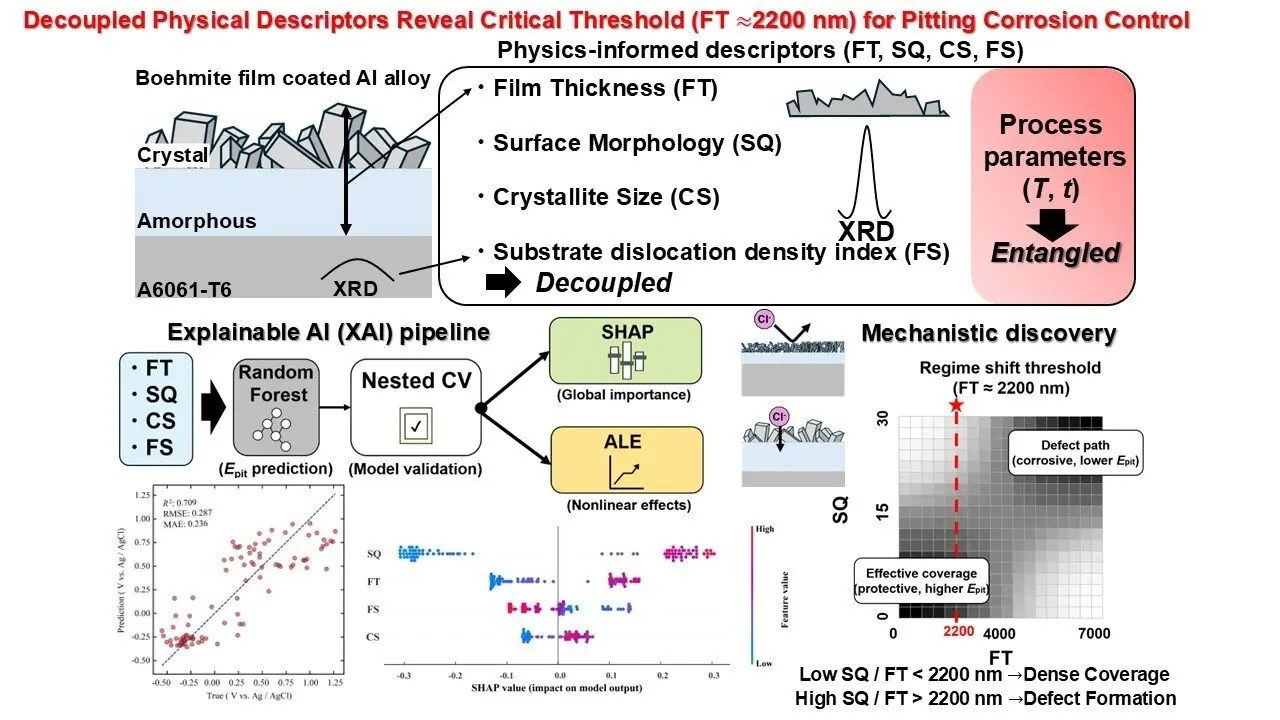
A new study from Shibaura Institute of Technology shows that the thickness of protective coatings on aluminum can dramatically change how surface roughness affects the material’s resistance to localized pitting corrosion. The research, published last month, used advanced imaging and machine‑learning techniques to map corrosion initiation sites across a range of coating thicknesses.
The team examined aluminum panels coated with a standard epoxy system. Samples were prepared with three different thicknesses: thin (≈50 µm), medium (≈150 µm), and thick (≈300 µm). Each panel was then exposed to a salt‑fog environment for 500 hours. High‑resolution microscopy revealed that in thin coatings, pitting began preferentially at microscopic peaks, while in thick coatings, pits appeared more randomly, independent of surface topography.
„The relationship between roughness and pitting is not fixed; it shifts with the protective layer’s thickness,” explained lead researcher Dr. Aiko Tanaka. „When the coating is thin, the underlying metal is more exposed, so the roughness directly influences where corrosion starts. As the coating thickens, it buffers the metal, diminishing the impact of surface peaks.”
How Does This Affect Maintenance Strategies?
The study’s machine‑learning model quantified the correlation between roughness metrics and pitting density. For thin coatings, the correlation coefficient was 0.78, indicating a strong link. In contrast, thick coatings showed a coefficient of 0.32, suggesting a weak relationship. Medium‑thick coatings lay in between, with a coefficient of 0.56.
These findings have practical implications for industries that rely on aluminum components, such as aerospace and marine engineering. Manufacturers often select coating thickness based on cost and weight considerations, assuming that a smoother surface will always improve corrosion resistance. The new data suggest that, for certain thicknesses, surface finish may be less critical than previously thought.
The research highlights that coating thickness should be considered a primary design variable when evaluating corrosion risk. Engineers may need to adjust surface roughness targets depending on the intended coating thickness. For thin coatings, achieving a very low roughness is essential to prevent pitting. For thicker coatings, the focus can shift to other factors, such as coating adhesion and defect density.
Frequently Asked Questions
The study also suggests that standard industry tests, which typically assess corrosion resistance on a single coating thickness, may not capture the full picture. Multi‑thickness testing could provide a more comprehensive understanding of how surface finish interacts with protective layers.
Maintenance protocols often rely on visual inspections of surface roughness to predict corrosion hotspots. With these new insights, inspection regimes could be tailored to the coating thickness. For thin‑coated components, routine monitoring of surface peaks may be more critical, whereas for thick‑coated parts, monitoring for coating defects and delamination could be prioritized.
The research team plans to extend their work to other metals and coating systems, including zinc‑rich primers and fluoropolymer coatings. They also aim to develop a predictive tool that integrates coating thickness, surface roughness, and environmental exposure to forecast pitting risk.