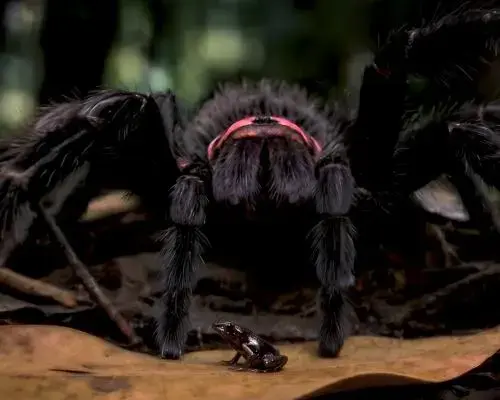
From Pixels to Predator: Crafting the Tarantula
An Australian digital designer, Jodie Heenan, unveiled „Guardians of the Burrow,” a short wildlife film entirely generated by artificial intelligence. The piece debuted at a weekend showcase and immediately attracted attention for its vivid portrayal of a giant Amazonian tarantula sharing a burrow with a tiny dotted humming frog.
Heenan built the film using a suite of generative AI tools, feeding descriptive prompts into text‑to‑image and video models. She aimed to test whether AI could produce a documentary that feels as authentic as traditional footage. The result is a seamless blend of hyper‑realistic visuals and narrative pacing that fooled many viewers into believing the scenes were captured on location.
The AI was instructed to render a massive tarantula crawling across damp earth, its legs casting intricate shadows. Heenan refined the output by iterating prompts, adjusting lighting, and stitching frames together. „The final image looks and feels real,” she said, noting that the creature’s texture and movement matched scientific references. The humming frog, a stark contrast in size, was generated with equal care, its speckled skin rendered in vivid detail. The AI’s ability to simulate depth of field and subtle motion gave the short a cinematic quality rarely seen in synthetic media.
Can AI Replace Traditional Wildlife Filmmaking?
Critics question whether machine‑made footage can ever capture the spontaneity of real wildlife encounters. Supporters argue that AI offers a low‑cost avenue for storytelling, especially for rare or endangered species that are hard to film. Heenan’s film, which won an award at its debut event, suggests that audiences are willing to accept AI‑crafted narratives when the visual fidelity is high. The success also raises concerns about transparency; viewers may need clear labeling to distinguish synthetic from authentic footage.
The emergence of AI‑driven documentaries could reshape the genre, lowering barriers for creators worldwide. As tools improve, more filmmakers may experiment with synthetic wildlife scenes, expanding the visual vocabulary of nature storytelling. Yet the industry will need guidelines to preserve credibility and avoid misinformation.
Frequently Asked Questions
How was the AI trained to depict the tarantula accurately? Heenan used publicly available images of Amazonian tarantulas as reference material, allowing the model to learn texture, coloration, and anatomy before generating new frames.
Did any real footage appear in the short? No. Every visual element, from the burrow environment to the animals themselves, was produced by AI without any filmed material.
What awards has „Guardians of the Burrow” received? The short earned a prize for innovative storytelling at its premiere festival, recognizing its blend of technology and artistic vision.