How AI Drones Change Combat Roles
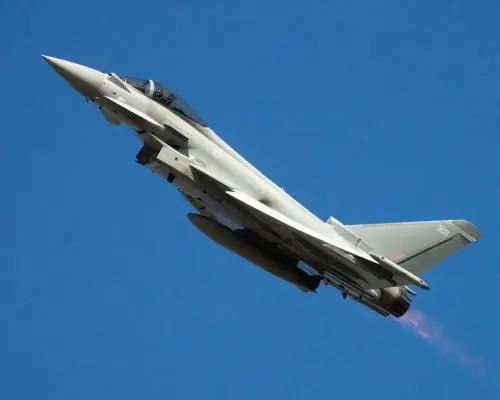
Royal Air Force Chief Marshal Harv Smyth announced on Monday that the service plans to pair Typhoon fighters with four AI-enabled drones. The drones will patrol hundreds of miles ahead of the aircraft. This shift marks a move toward autonomy over human flesh in combat operations.
The announcement signals a major transformation in how the RAF conducts missions. Smyth emphasized that technological progress will reduce the need for direct human involvement in dangerous zones. The drones act as extended sensors and weapons platforms, allowing pilots to stay safer while maintaining situational awareness.
The four-drone formation extends the Typhoon's operational reach significantly. Each drone can operate independently, making tactical decisions without constant human input. This reduces the cognitive load on pilots and allows them to focus on higher-level command decisions. The technology also enables the aircraft to project power over larger areas without risking additional manned aircraft.
What Does This Mean for Future Air Warfare?
Smyth noted that this approach limits the role of military personnel „towards the outside.”In practice, this means fewer humans are deployed into contested airspace. The drones handle the initial contact and data gathering, while human pilots coordinate from a safer position. This model could reduce casualties and operational risk for the RAF.
The shift toward autonomous systems will reshape training, procurement, and mission planning for the RAF. Pilots will need new skills to manage drone swarms effectively. Defense budgets may prioritize drone development over traditional fighter production. Allies and adversaries will likely accelerate their own autonomous air programs in response.
Frequently Asked Questions
The long-term consequence is a fundamental change in air warfare doctrine. Human pilots become commanders of drone teams rather than frontline operators. This could make air combat faster, more precise, and less dependent on individual pilot skill in high-risk scenarios.
Will the RAF phase out manned fighters entirely? No. The plan pairs Typhoon fighters with drones, keeping human pilots in command roles. Manned aircraft remain central to the force structure.
How far can the AI drones operate independently? The drones can patrol hundreds of miles ahead of the Typhoon. They make local tactical decisions without constant human input, extending the fighter's effective range.