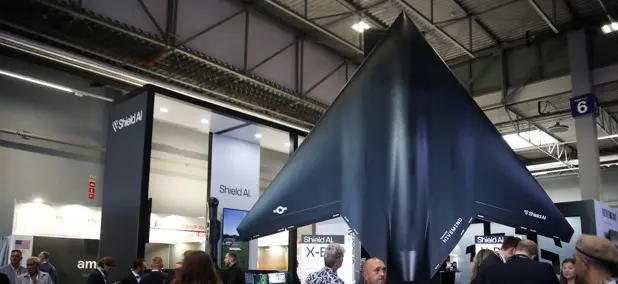
Autonomous Combat: How the X‑BAT Will Operate
The U. S. Navy has committed $150 million to develop the X‑BAT, a fully autonomous fighter platform expected to fly within months, according to a recent press release. The prototype was showcased at the 34th International Defence Industry Exhibition in Kielce, Poland, on September 8, 2026, where industry observers noted its advanced stealth and sensor fusion capabilities.
Shield AI, a private aerospace startup, is partnering with the Navy’s Tactical Aircraft Technology Office to accelerate the program. The funding will cover design, testing, and integration of the X‑BAT’s artificial‑intelligence flight control system. The Navy aims to achieve first flight by late 2026, with operational deployment slated for 2027.
What Does This Mean for Naval Aviation?
The X‑BAT is engineered to replace manned fighters in high‑risk environments. Its AI core processes data from radar, infrared, and electronic‑support measures in real time, enabling rapid target identification and engagement without human intervention. Shield AI claims the system can maintain situational awareness in contested airspace, even when jamming or cyber‑attacks are present.
„By removing the pilot, we eliminate a critical vulnerability and increase sortie rates,” said a Shield AI spokesperson. The platform’s design incorporates redundant flight control pathways and failsafe mechanisms to ensure safe operation if the primary AI fails. The Navy’s Tactical Aircraft Technology Office will conduct rigorous flight tests to validate these safety features.
Will Autonomous Fighters Survive the Battlefield?
The introduction of the X‑BAT could reshape naval air strategy. Without a pilot onboard, aircraft can operate longer missions, carry heavier payloads, and reduce crew risk. The Navy anticipates that the X‑BAT will complement existing carrier‑based fighters, providing a cost‑effective solution for low‑intensity conflicts and surveillance missions.
Future Outlook
However, the shift to autonomous systems raises questions about command and control. The Navy plans to integrate the X‑BAT with existing combat management systems, allowing human operators to issue orders remotely. Shield AI’s technology will also support cooperative engagement, enabling multiple autonomous aircraft to coordinate attacks.
Experts caution that autonomous aircraft must demonstrate resilience against sophisticated electronic warfare. The X‑BAT’s AI relies on sensor fusion, but adversaries may attempt to spoof or jam inputs. Shield AI has tested the platform against simulated jamming scenarios, reporting successful target reacquisition within seconds.
# Frequently Asked Questions
„Autonomy is only as good as the data it receives,” noted a defense analyst. „The real test will be in live combat, where adversaries will exploit every weakness.” The Navy’s upcoming test flights will assess the X‑BAT’s performance in contested environments, providing data for future upgrades.
If the X‑BAT meets its milestones, the Navy could field a fleet of autonomous fighters by 2028. This would mark a significant shift toward unmanned combat operations, potentially influencing other branches of the armed forces. The program also opens pathways for commercial applications, such as autonomous cargo transport and disaster response.