Can AI Truly be Creative?
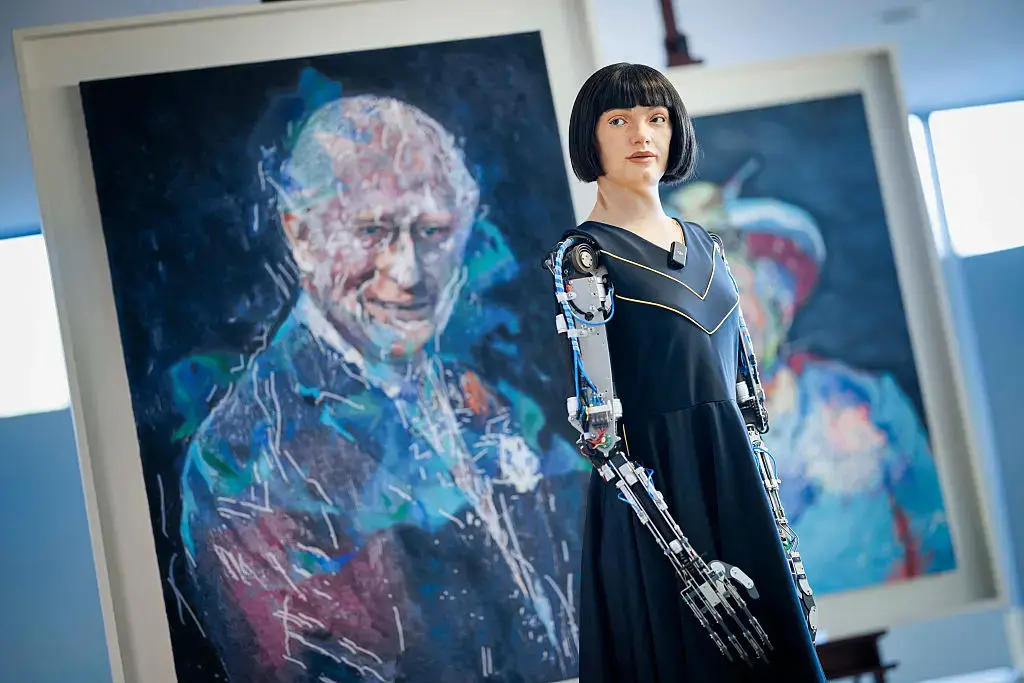
A robot artist, Ai-Da, showcased her paintings of Britain's royal family at the AI for Good Global Summit in Geneva, sparking concerns about AI's impact on human artists. Many fear AI will threaten the livelihood of human artists, if not the very existence of art itself.
The rise of AI-generated art has been rapid, with many AI systems now capable of producing sophisticated and often indistinguishable works. This has led to a growing unease among human artists, who worry that their skills will become redundant.
Will AI Replace Human Artists?
While AI systems can process and generate vast amounts of data, they lack the emotional depth and personal experience that human artists bring to their work. Ai-Da, for instance, uses complex algorithms to create her paintings, but her output is still determined by the data she was trained on.
As AI-generated art becomes more prevalent, it is likely to change the way we perceive and interact with art. Some argue that AI can be a useful tool for human artists, allowing them to explore new ideas and techniques. Others, however, see it as a threat to the very notion of creativity.
Frequently Asked Questions
The fear is that AI will become so advanced that it will be able to produce art that is not only indistinguishable from human-created work but also more appealing to buyers. This could lead to a decline in demand for human artists, potentially putting many out of work.
The consequences of AI's growing presence in the art world are far-reaching. As AI continues to evolve, it is likely to have a profound impact on the way we create, perceive, and interact with art. While some see AI as a tool to augment human creativity, others fear it will ultimately replace it.