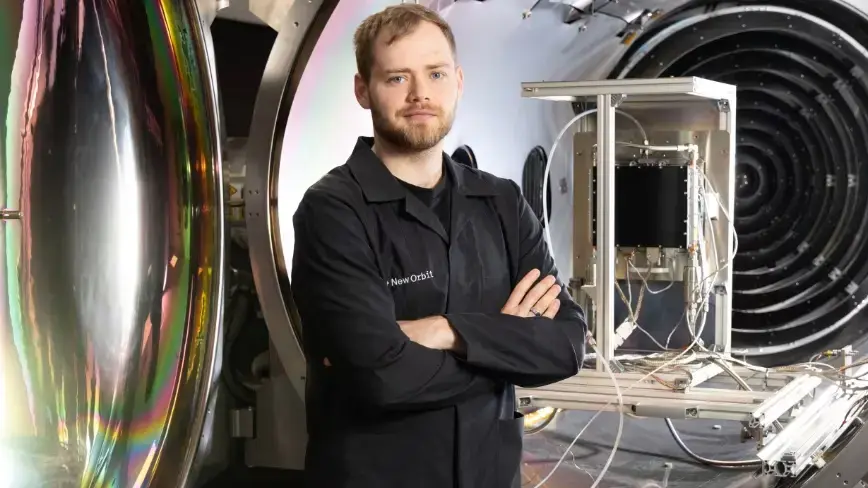
Breaking the 60-Year Barrier
NewOrbit, a UK-based startup, has secured an oversubscribed $18.5 million Series A funding to develop a commercial satellite for very low Earth orbit. The satellite is expected to launch in 2028, marking a significant milestone in space technology.
Between commercial aircraft flying at 10km and conventional satellites orbiting at 500km lies a largely unexplored band of near-Earth space. NewOrbit aims to fill this gap with its innovative satellite design.
Can Satellites Thrive in Hostile Environments?
For six decades, the 200-300km altitude range has remained untouched due to the challenges posed by atmospheric drag and atomic oxygen. NewOrbit's technology promises to overcome these hurdles, enabling the deployment of satellites in very low Earth orbit.
The startup's achievement is significant, as satellites in lower orbits can provide higher-resolution images and more accurate data. NewOrbit's satellite will operate in an altitude range that is typically reserved for short-lived scientific missions.
NewOrbit's success hinges on its ability to design satellites that can withstand the harsh conditions of very low Earth orbit. The company's technology is expected to play a crucial role in expanding our understanding of the near-Earth space.
Frequently Asked Questions
As NewOrbit's satellite prepares for launch, the implications of its technology are far-reaching. With the ability to deploy satellites in lower orbits, the startup is poised to revolutionize various industries, including Earth observation and telecommunications.
What is very low Earth orbit? Very low Earth orbit refers to the altitude range of 200-300km, where atmospheric drag and atomic oxygen pose significant challenges. How will NewOrbit's satellite benefit users? The satellite will provide higher-resolution images and more accurate data, benefiting industries such as Earth observation and telecommunications. What are the challenges of operating in very low Earth orbit? The main challenges include atmospheric drag and atomic oxygen, which can damage satellites and limit their lifespan.