Gender Disparities in AI Hiring Trends
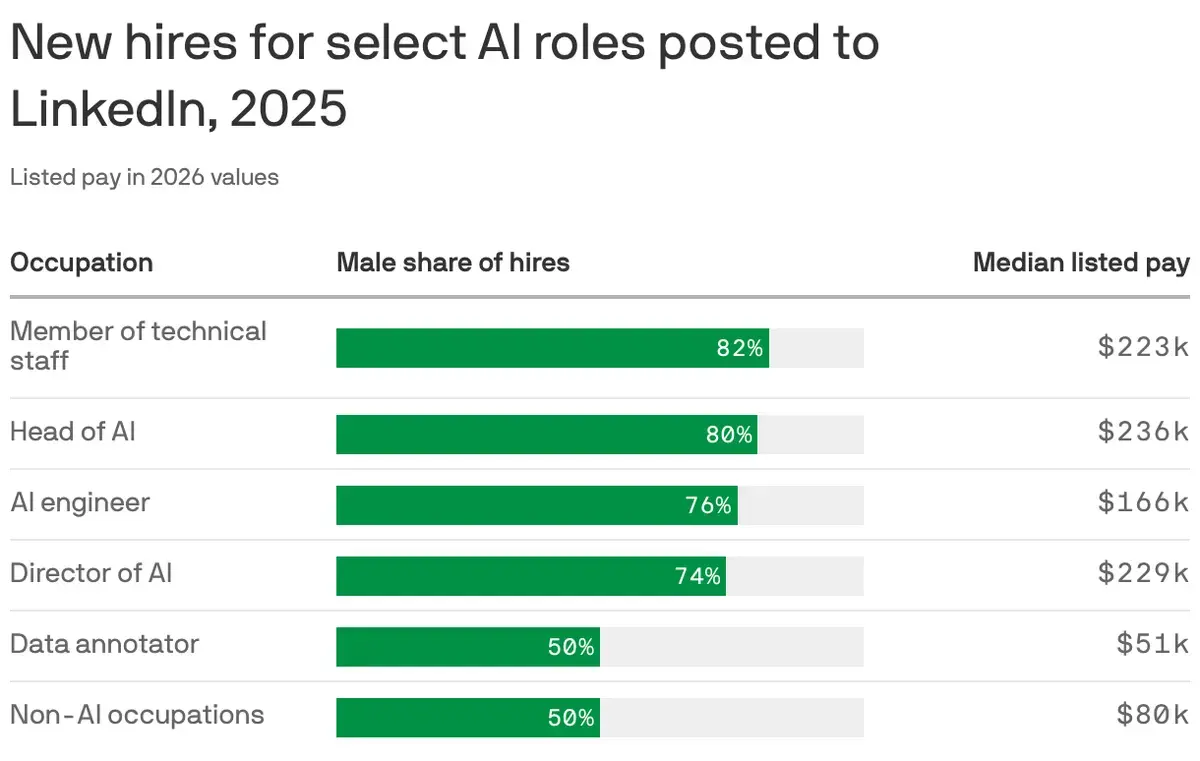
According to new data from LinkedIn, women accounted for just over a quarter of new hires in artificial intelligence roles in the U. S. last year. This figure stands in stark contrast to the 50% representation of women in non-AI job sectors during the same period. The disparity in hiring highlights a significant gender gap in a rapidly expanding field. AI jobs are among the fastest-growing and highest-paying positions available today. As the demand for skilled professionals in this area rises, the underrepresentation of women could have long-term implications for the workforce.
The LinkedIn report reveals that while women are increasingly entering the workforce, their presence in AI roles remains limited. In 2022, women represented only 26% of new hires in AI, compared to a more balanced hiring rate in other sectors. This gap raises concerns about equal opportunities in one of the most lucrative job markets.
Experts suggest that this underrepresentation may stem from various factors, including a lack of access to training and education in technology fields. Additionally, the perception of AI as a male-dominated industry may deter women from pursuing these roles. Addressing these issues is crucial for fostering a more inclusive environment in AI.
What Can Be Done to Encourage Women in AI?
To bridge this gap, initiatives aimed at encouraging women to pursue careers in technology are essential. Educational programs that focus on STEM (Science, Technology, Engineering, and Mathematics) can help equip young women with the necessary skills. Mentorship programs and networking opportunities can also play a pivotal role in supporting women in their career paths.
The industry must acknowledge these challenges and actively work towards creating a more balanced workforce. Companies can implement diversity hiring practices and support female employees through career development programs.
Frequently Asked Questions
In conclusion, the underrepresentation of women in AI roles poses challenges for the future of the industry. As AI continues to grow, ensuring equal opportunities for all genders will be vital for innovation and progress.
Why are women underrepresented in AI jobs? Women face barriers such as limited access to training and a perception of the tech industry as male-dominated, which can deter them from pursuing these careers.
What steps can companies take to improve gender diversity in AI? Companies can implement diversity hiring practices, offer mentorship programs, and support educational initiatives to encourage more women to enter the field.