Strengthening Maritime Security
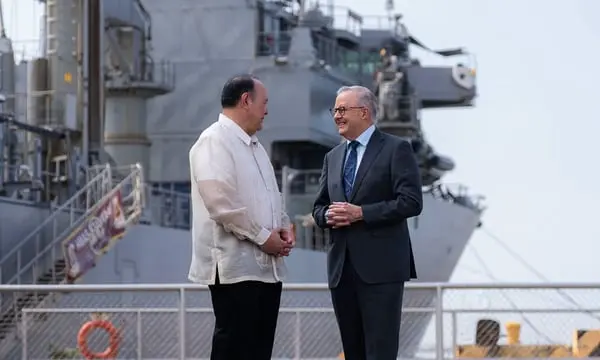
The partnership extends support to the Philippine Navy and Coast Guard. Both are on the front line against China in the South China Sea. Since April last year, Australia allocated $9.5 million for equipment and training. This includes drones and operator courses. Canberra also contributes to military infrastructure on five bases in Luzon. These facilities are part of a broader deterrence strategy.
Gray-Zone Tactics and Escalation
Beijing uses gray-zone tactics, such as water cannons and maritime harassment. These methods apply pressure without crossing the threshold of war. Coast guard clashes are frequent in the Spratly Islands and Scarborough Shoal. China continues to ignore the 2016 arbitration ruling. That decision established Beijing’s maritime claims lack international legal basis.
Exploiting Global Distractions
The Iran conflict gives China a new opportunity to test Philippine resilience. With US naval forces redirected to the Middle East, Beijing intensified operations around the archipelago. It extended them eastward, past Taiwan, into the Pacific. This move exploits the absence of US presence and attention. Manila needs partners who can provide better surveillance and specialized training.
Building a Coordination Hub
The Philippines maintains its alliance with the United States. However, it needs a dense network of regional security relationships. Each added partner raises the diplomatic cost for Beijing. The new defense arrangement coincides with plans for a Joint Coordination Center. This center will synchronize defense investments from Australia, the US, Japan, and the Philippines. It will act as a hub to ensure support is not fragmented.
Protecting Australian Trade
For Canberra, consolidating presence in the region is strategically necessary. Australia views the defense of its prosperity as central to its defense strategy. The Philippines is where threats to Australian trade interests are most acute. If Beijing weakens Manila, it may use the same tactics elsewhere. Investing in Manila’s resilience is cheaper than responding to new conditions in the South China Sea.