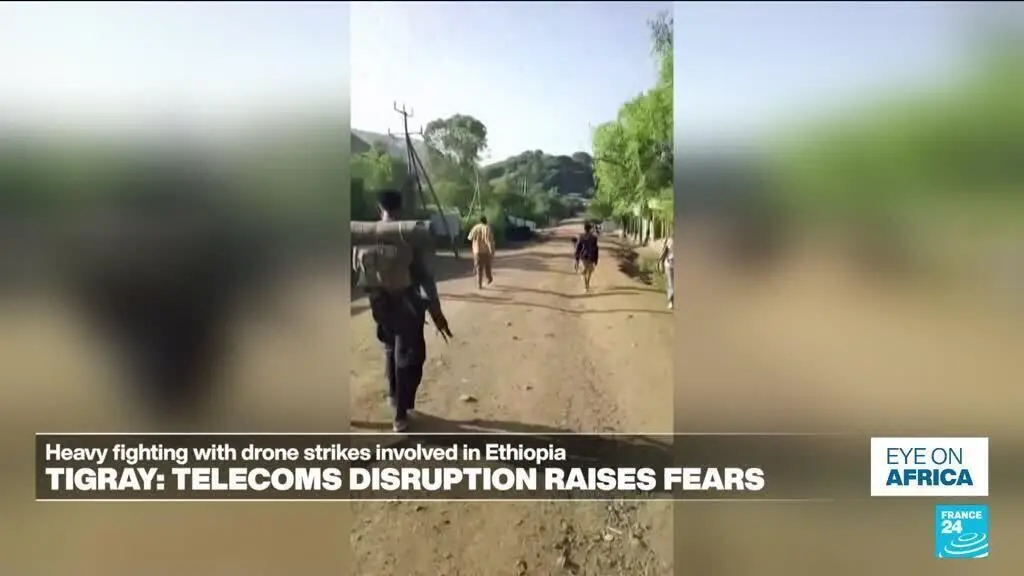
Connectivity Loss Amplifies Regional Isolation
Heavy fighting has erupted between the Ethiopian National Defense Force and the Tigray People’s Liberation Front in northern Ethiopia. The conflict has intensified significantly over recent days, leading to widespread disruption in the region. Local residents report that major telecommunications networks have gone offline, cutting off communication channels. This loss of connectivity has heightened anxiety among civilians and aid workers alike. The situation remains volatile as both sides engage in active combat operations across key areas.
The breakdown in telecommunications services has created a significant information vacuum. Without reliable phone signals or internet access, locals struggle to coordinate movements and verify safety. Aid organizations find it difficult to assess the scale of displacement and damage. The silence from affected zones fuels speculation about the intensity of the ground battles. Officials have not yet provided a comprehensive update on the current status of the front lines.
The failure of telecom infrastructure is not merely an inconvenience; it is a critical operational setback. In modern conflicts, digital links are essential for command and control. When these systems fail, coordination between units becomes slower and more error-prone. Civilians rely on mobile phones to contact family members in safer locations. The sudden blackout leaves many isolated, unable to receive emergency alerts or send out distress signals. Technical teams are working to restore fiber optic cables and satellite uplinks. However, ongoing shelling poses risks to repair crews moving through contested territory. The physical damage to towers and switching centers further complicates the recovery process.
How Does Digital Silence Affect Civilian Safety?
The lack of digital communication directly impacts the ability of humanitarian groups to deliver aid. Logistics teams cannot confirm which routes are safe for convoys. Medical staff struggle to share patient data with remote specialists. Families separated by the fighting face prolonged uncertainty regarding loved ones’ whereabouts. This digital isolation often leads to the rapid spread of unverified rumors. Community leaders use traditional methods to disseminate news, but these are slow. The psychological toll on residents is substantial. Living without immediate access to the outside world increases stress levels. It also hampers the economic activities of local businesses that depend on digital transactions.
The outlook for the next phase of the conflict depends heavily on whether communications can be restored quickly. If the silence persists, the risk of miscommunication between military commanders rises. This could lead to unintended escalations or prolonged stalemates. International observers are monitoring the situation closely, awaiting official statements. The restoration of telecom services will serve as a key indicator of stability. Until then, the region remains under a heavy cloud of uncertainty. Both parties must prioritize securing the infrastructure to allow for clearer dialogue and coordination.
Frequently Asked Questions
Why have telecommunications failed in the conflict zone? Ongoing heavy fighting has caused physical damage to infrastructure. Shelling and ground operations have disrupted power supplies and damaged transmission lines. This leads to widespread outages in affected areas.
Who is involved in the current clashes? The Ethiopian National Defense Force is engaged with the Tigray People’s Liberation Front. These two groups are currently locked in intense combat operations. The fighting is concentrated in specific northern regions.
How does the outage impact aid delivery? Aid workers lose real-time coordination capabilities during the blackout. They cannot easily verify safe passage for supply convoys. This delay slows down the distribution of essential medical and food supplies.