Drone Development Boosts Ukraine’s Air Defense
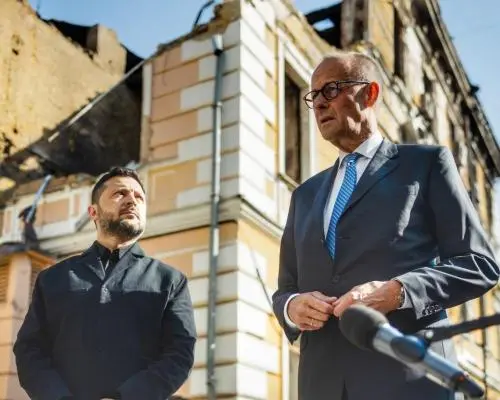
German Chancellor Friedrich Merz announced on Sunday in Kyiv that Berlin will provide Ukraine with €1 billion (about $1.1 billion) in military assistance. The package includes funding for the joint production of drones capable of countering Russia’s jet‑powered unmanned aircraft. Merz also disclosed an additional €350 million earmarked for rebuilding Ukraine’s energy infrastructure.
The aid comes as the war in Ukraine enters its third year, with Kyiv seeking to modernize its defenses against increasingly sophisticated Russian attacks. Germany’s commitment reflects a shift from earlier hesitations over supplying lethal weapons, signaling a firmer stance against Moscow’s aggression. Merz emphasized that Germany will not be swayed by intimidation and will continue to back Kyiv’s sovereignty. The funding will support German‑Ukrainian collaboration on drone technology, a sector where recent technical breakthroughs have improved interception capabilities. By investing in local production, Berlin aims to accelerate delivery times and reduce reliance on external supply chains.
The newly announced €1 billion will finance the design and manufacture of interceptor drones that can engage Russia’s high‑speed, jet‑propelled UAVs. German defense firms, working alongside Ukrainian partners, will integrate advanced sensors and AI‑driven targeting systems. „These drones represent a significant leap in our ability to protect Ukrainian skies,” Merz said during a press conference. The initiative also includes training Ukrainian operators and establishing maintenance facilities on Ukrainian soil, ensuring the technology remains operational long after initial deployment.
Will the Energy‑Sector Funding Accelerate Ukraine’s Recovery?
Beyond the immediate tactical advantage, the program is expected to create a domestic defense industry hub in Ukraine, fostering job creation and technological transfer. Analysts note that such collaboration could position Ukraine as a future exporter of counter‑drone solutions, diversifying its post‑war economy. The German government has stressed that the project will adhere to strict export controls, preventing any technology from falling into unintended hands.
In addition to military aid, Merz unveiled a €350 million package aimed at repairing Ukraine’s war‑torn energy grid. The funds will target damaged power plants, transmission lines, and renewable energy installations. „A resilient energy system is essential for civilian life and for sustaining the war effort,” Merz explained. By restoring electricity, the plan seeks to reduce reliance on fossil‑fuel imports and support Ukraine’s transition to greener energy sources.
The investment aligns with broader European efforts to bolster Ukraine’s energy independence. Experts argue that a stable power supply will improve public morale, facilitate industrial output, and reduce vulnerability to Russian sabotage. However, challenges remain, including securing safe corridors for construction crews and navigating the complex regulatory environment.
The combined military and energy commitments underscore Germany’s resolve to stand with Ukraine despite domestic debates over defense spending. As the conflict persists, Berlin’s actions may influence other NATO members to increase their contributions, potentially reshaping the alliance’s collective response to Russian aggression.
Frequently Asked Questions
What specific types of drones will Germany help produce? The program focuses on interceptor drones equipped with radar and AI‑driven targeting to neutralize Russia’s jet‑powered UAVs, enhancing short‑range air defense.
How will the €350 million energy fund be allocated? The money will be used to repair damaged power infrastructure, upgrade transmission networks, and support renewable energy projects to restore reliable electricity across Ukraine.
Will other European countries follow Germany’s lead? While each nation decides independently, Germany’s sizable pledge may encourage additional NATO members to boost both military and reconstruction aid for Ukraine.