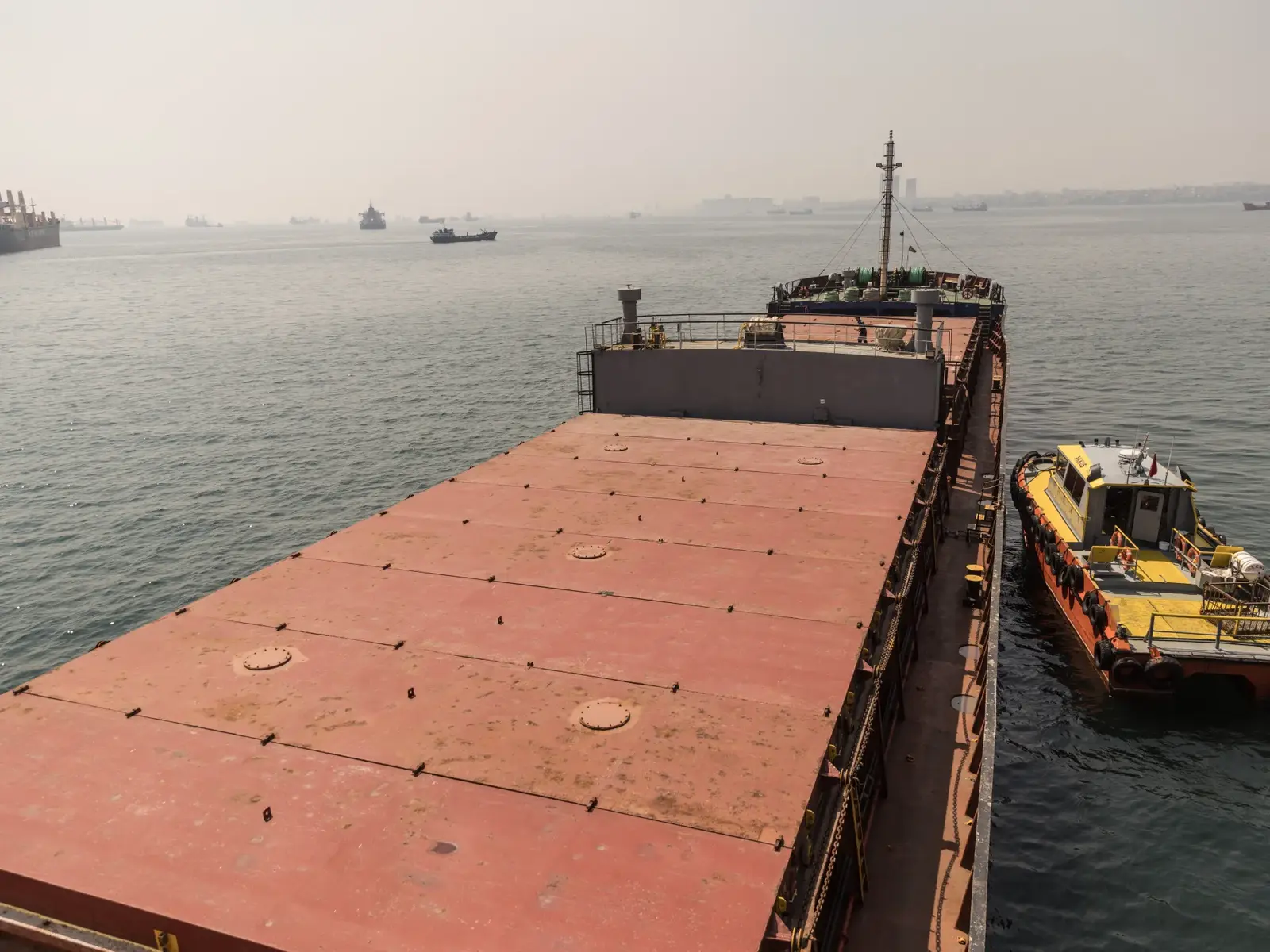
Global food security under pressure
Most targeted vessels are commercial ships carrying oil, gas, and food. These goods are vital for economies and survival. In October, maritime traffic in the Black Sea saw a sharp spike. Drone strikes hit at least nine ships near Romania and Bulgaria. This dangerous trend tests NATO's cohesion. Members have complained about Russian incursions. Questions arise about invoking Article 5. Russia repeatedly bombed Ukrainian ports on the Black Sea and the Danube. With ports disrupted, Kyiv relies on alternative routes to export grain to Africa and the Middle East.
These routes fall into three main categories: - The Danube corridor via Romania: Grain moves from Ukraine's interior to Izmail and Reni ports, then through Romania's Sulina Canal to the Black Sea, or to Constanța for transfer to larger vessels. - Land corridors through the EU: Ukraine uses trains and trucks to move grain via Poland, Slovakia, Hungary, and Romania, then ships it from Baltic, Adriatic, or Black Sea ports. - The Ukrainian maritime corridor along NATO coasts: Ships leave Odesa, travel the western Black Sea near Romanian and Bulgarian waters, then head to Turkey and the Bosphorus. However, these alternative corridors have not escaped Russian attacks. According to maritime security firm Ambrey, the monthly attack rate on the Danube corridor was 3.7 times higher in July-September than in the first half of 2026.
A war against food, from land
Meanwhile, the Danube's share of Ukrainian port cargo jumped from 10% in Jan-Jun to 74% in August 2026.
Seeking maximum damage, neither Russia nor Ukraine has refrained from using any available means. The conflict initially focused on military targets. Attacks later expanded to infrastructure and ports, then refineries and energy plants. Today, food facilities and grain-carrying ships are increasingly in the line of fire. Early in the war, Moscow targeted Ukrainian grain and oilseed production infrastructure. It blocked access to Black Sea ports and struck grain carriers. This forced Ukraine to secure alternative export routes, including the Danube, which became a target. Grain and vegetable oil exports are vital to Ukraine's economy. Data shows they accounted for about 40% of the country's total merchandise exports in the first half of this year. This explains why Russia focused strikes on ports and ships carrying these economically critical products.
Supply shortages and rising prices
Ukraine's agriculture minister estimates that if ports remain closed, the country will lose at least $8 billion between June this year and June 2027. This shortfall equals 20% of last year's total export revenue. Russian attacks on cargo ships and export infrastructure have largely halted maritime traffic through Ukrainian Black Sea ports. These ports previously handled about 90% of the country's agricultural exports. Conversely, Russian grain production and exports remained relatively protected until recently. But this summer, Kyiv redirected drones toward Russian grain and vegetable oil export facilities, and commercial ships, including grain carriers. This marked a significant shift in the economic war, as Ukrainian strikes previously focused on energy and military sites. Ukrainian attacks disrupted Russia's main Black Sea and Sea of Azov grain export terminals. This forced Moscow to divert some exports to Baltic ports. The Sea of Azov previously handled nearly a quarter of Russian grain exports.
Russia is the world's largest grain exporter. Ukraine ranks fifth. Together, they account for nearly 27% of global grain exports. Recent attacks have pushed Chicago futures contracts to their highest levels since 2023. Prices rose about 20% in the first nine months of this year. The escalation of attacks by both sides coincided with each country's peak grain export season. Winter wheat, the dominant variety grown in Russia and Ukraine, is harvested in summer and exported at the end of summer and the beginning of