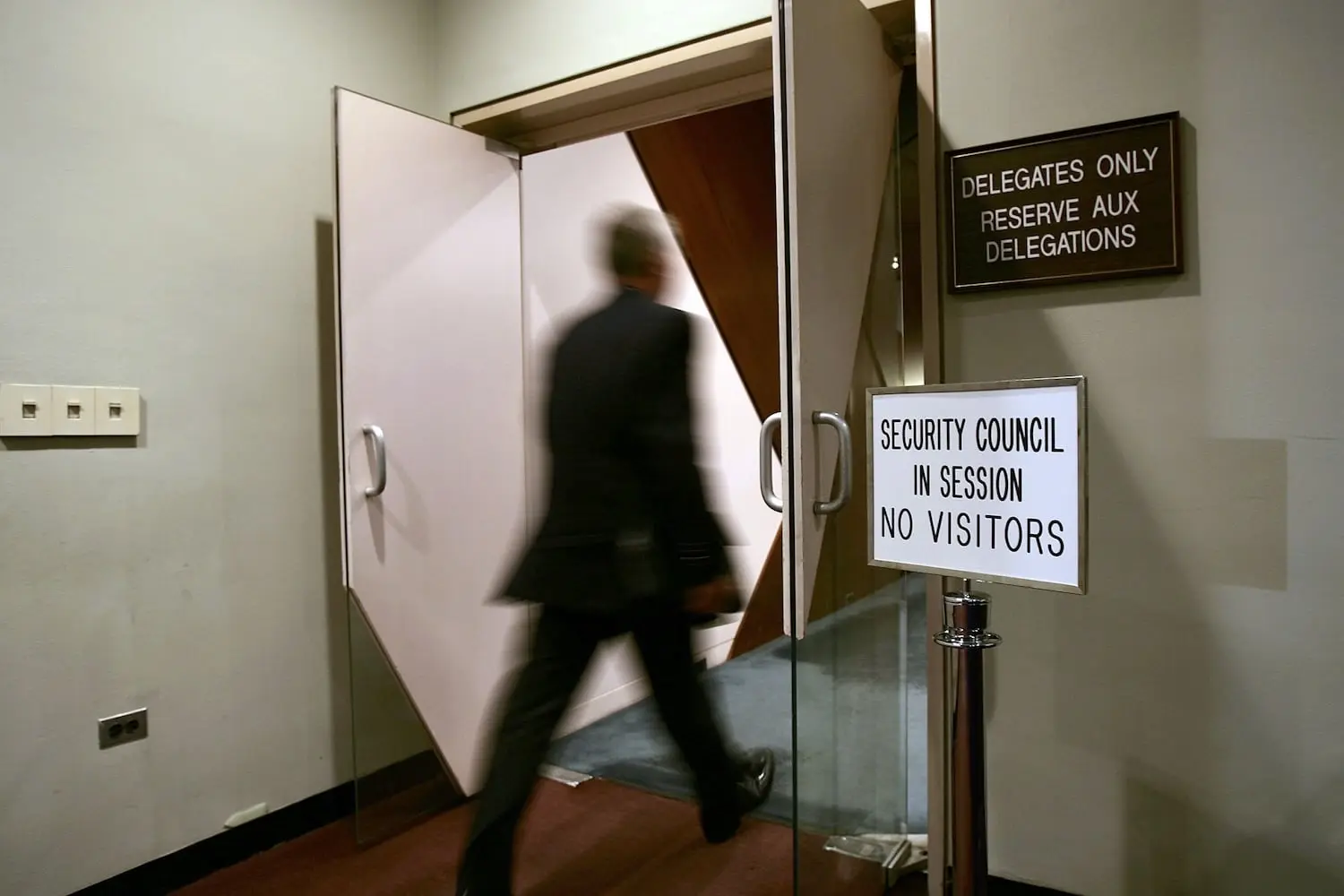
The P5 will be the biggest losers if the UN Security Council disappears in insignificance
It is possible to solve the problem of the United Nations. How to break the UN blockade. Security Council reform. The international order is not the absence of conflict, nor the rigid defense of the status quo. Rather, it is the existence of predictable mechanisms to manage the inevitable split. And the main mechanism that is tasked with maintaining international peace and security - the United Nations Security Council - is no longer fit for purpose . The UN Security Council has been like the world since 1945, granting privilege status to World War II winners and holders of colonial empires. Without reforms that give emerging and middle powers a status proportional to their growing influence, states will ultimately see more sense in pursuing their unilateral security interests or through exclusive and destabilizing blocs.
At this time, with a few notable exceptions, States remain committed to speaking the language of multilateralism. But make no mistake: reforming the UN Security Council is not a matter of aesthetics or desirability; it is an absolute necessity. Three dynamics supported the reform. But each can slowly yield, creating a rare window of authentic change. The first and most frequently mentioned obstacle is the five permanent members of the Security Council, or the P5, the United States, China, Russia, France and the United Kingdom. The P5 countries are afraid to admit the growing powers as veto partners because it would reduce their own influence in the body and make it more susceptible to blockade. However, without reform, the legitimacy of the Council in the eyes of the global majority will deteriorate, making it increasingly irrelevant.
The P5 will be the biggest losers if the UN Security Council disappears in insignificance, because they have the most to lose: their veto power. Consequently, the P5 is likely to allow reform only when the council appears to be on the brink of collapse - a point the world could soon approach if the P5 continues to exercise its veto power with impunity. The second problem is the blockade between the two main reform groups: the G4 coalition of Germany, Japan, Brazil and India, which favors the expansion of the permanent members of the UN Security Council to include themselves, and the Uniting for Consensus group, which favors only the addition of additional elected seats to the council. The uncompromising competition between these two blocs has prevented further proposals from growing.
The simulation shows that the G4 model will dramatically increase lockdown over the next five decades
However, Germany's recent unsuccessful bid for a two-year term on the council has called into question the viability of its request for a permanent seat - and the viability of the G4 proposal as a whole. This allows for a possible transformation that allows for the emergence of new and more creative reform ideas. The third factor is that the discussions on the reform model that would best improve the effectiveness, effectiveness and legitimacy of the UNSC have been largely speculative so far. Neither party was able to provide any significant precision on the implications of the proposed reforms. And that's changing now. Artificial intelligence enables complex simulations to be carried out that calculate potential changes in the performance of the board. We did a simulation like this to determine exactly what each proposal would get and what it would risk.
The simulation shows that the G4 model will dramatically increase lockdown over the next five decades. The Council's work will slow down, as the speed at which resolution decisions are taken will increase from 28.5 days to 42.1 days and the use of veto power will increase by over 60%. Despite the fact that we gave them a seat at the table, the resulting paralysis would encourage the leadership to work outside the UN Security Council, completely defeating the purpose of reform. However, while the Uniting for Consensus proposal would limit the damage to the Council's efficiency and effectiveness, it fails to address the lack of legitimacy. The UN Security Council cannot effectively serve as a long-term custodian of the international order if Britain continues to enjoy a more privileged position than India - the most populous country in the world and probably soon to be the third largest economy.
How do we solve this riddle? The AI simulation shows two mechanisms. Firstly, if more than one country is to obtain the veto, then this must be balanced by creating a veto cancellation mechanism: for example, a veto holder must obtain one or two concurrent negative votes among the current Council members, otherwise a two-thirds majority of the General Assembly may cancel the veto.