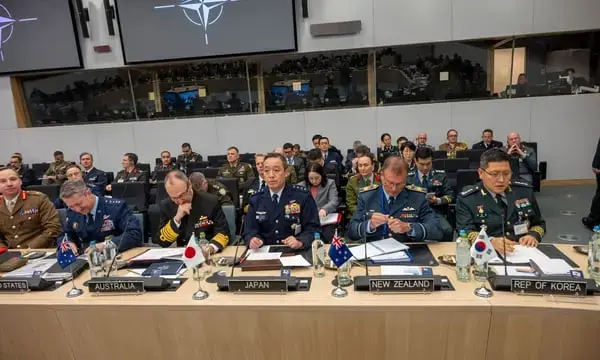
A Deeper Defense Dialogue
NATO and Indo-Pacific partners maintained their cooperation despite the absence of regional leaders at the alliance's last two summits. The Indo-Pacific four - Australia, Japan, New Zealand, and South Korea - have been engaging with NATO since 2011.
The absence of Indo-Pacific leaders at the last two NATO summits doesn't indicate a lack of interest in the partnership. Chiefs of defense from the US, Australia, Japan, and New Zealand have been meeting regularly. Their discussions focus on security concerns, including Russia's war in Ukraine and China's rising influence.
Can NATO's Indo-Pacific Partnership Withstand Global Challenges?
NATO's Indo-Pacific partners have been increasingly involved in the alliance's defense planning. Australia, for instance, has participated in NATO's enhanced opportunities partner program. Japan and South Korea have also deepened their cooperation with NATO, with Japan becoming the alliance's first Asian partner to sign a security agreement.
The partnership is driven by shared security concerns. NATO's Indo-Pacific partners are worried about the implications of Russia's aggression in Ukraine for their own regional security. They are also concerned about China's growing military presence and its impact on global stability.
Frequently Asked Questions
Despite the absence of Indo-Pacific leaders at the last two summits, the partnership is expected to endure. NATO's cooperation with the Indo-Pacific four is likely to continue, driven by shared security concerns and a desire for stability in the region.
The partnership will likely play a crucial role in shaping the global security landscape. As the world grapples with rising tensions and emerging challenges, NATO's cooperation with its Indo-Pacific partners will remain essential.