Can European Unity Stop Global Escalation?
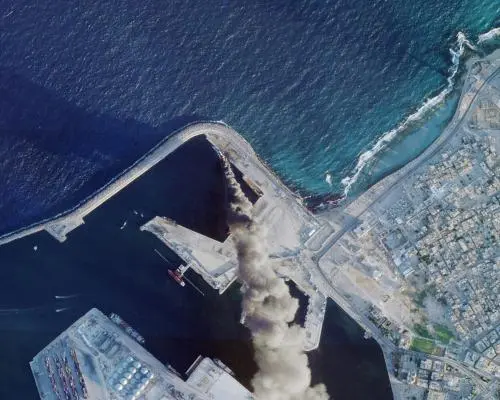
This maritime strike follows a series of escalating security incidents spanning from Eastern Europe to the Baltic Sea and the Mediterranean basin. Experts view these widening hostilities as a direct consequence of Moscow's full-scale invasion initiated in 2022, which continues to spiral outward without effective containment.
The successful attack in North Africa highlights Kyiv's growing capability to project power into distant regions traditionally considered safe for Russian military assets. By targeting warships far from the immediate combat zone in Ukraine, military planners are forcing Moscow to rethink the security of its naval deployments worldwide.
European capitals face mounting pressure as the conflict breaches regional boundaries and affects broader Mediterranean stability. Analysts warn that these expanding friction points threaten international trade routes and coastal security unless diplomatic channels achieve sudden breakthroughs.
The widening theater of war serves as a sharp reprimand to Western leaders who have struggled to formulate a unified geopolitical strategy against Moscow. Without a cohesive and singular European voice, the confrontation risks morphing into a wider global crisis with unpredictable international repercussions.
Frequently Asked Questions
Diplomatic observers emphasize that fragmented responses from individual nations only embolden further military escalation across multiple continents. A coordinated political approach remains the primary mechanism available to prevent the hostilities from engulfing neighboring regions and beyond.
What military asset did Ukraine target in Libya? Ukrainian forces launched a successful drone strike against a newly built Russian warship docked in the port city of Benghazi.
How far is the attack site from Kyiv? The targeted Libyan port lies more than 1,300 miles away from the Ukrainian capital, highlighting Kyiv's long-range operational reach.